Selling an Inherited Property in Atlanta, GA: Your Guide

An inherited Atlanta house can arrive with more questions than answers. You may be handling a loved one's affairs, coordinating with relatives, maintaining a vacant property, and trying to decide whether to renovate or sell, all while the legal paperwork is still moving.
Selling an inherited property in Atlanta, GA is possible, but the first step isn't choosing an agent or accepting a cash offer. You need to confirm who has authority to sell, how the property is titled, and whether probate, court approval, or additional title work is required. From there, the practical choices are a traditional listing, an as-is MLS sale, or a direct cash transaction.

Get a cash offer for your home
Updated for 2026
Selling an Inherited Home in Atlanta: What Heirs Actually Face
An inherited Atlanta house may be ready for a valuation before the estate is ready to close. Family members can often inspect the property, organize records, and discuss sale options while probate continues. The eventual listing agreement, purchase contract, and deed still must be handled by the person or people with legally recognized authority.
The key distinction is between being named as an heir and being authorized to convey title. A will can identify who should receive the house without giving that beneficiary power to sign a listing agreement or deed immediately. Depending on the ownership structure, the transaction may require a court-appointed executor or administrator, a trustee, a surviving owner, or properly documented heirs.

Start with title authority, then assess the house
Before estate funds go toward paint, flooring, or landscaping, assemble the deed, death certificate, will or trust documents, and probate appointment papers. A Georgia closing attorney or title company can review those records and identify who may sign, whether additional court action is needed, and what could prevent a marketable deed.
The deed review should establish whether the property was owned solely by the decedent, jointly with survivorship rights, as a tenancy in common, through a trust, or under another arrangement. Each structure affects the path to closing. A buyer cannot cure a missing heir, an unreleased mortgage, or an estate representative who lacks power to sell.
Practical rule: A property can be ready for showings while the title is not ready for closing. Treat those as separate milestones.
Build the Atlanta sale decision around net proceeds
Once authority is documented, value the property using three practical questions: what condition is the house in, what would comparable Atlanta buyers likely pay after needed work, and how much will the estate spend while waiting to sell? Include the mortgage payoff, property taxes, liens, insurance, utilities, maintenance, probate expenses, repairs, selling costs, and vacancy time.
A traditional agent listing may produce broader exposure when the home is in good condition. An as-is MLS listing can limit repair spending while retaining access to market buyers. A cash sale may reduce showings and work for a neglected, vacant, or emotionally difficult property, though convenience can mean a lower price.
The strongest choice is the one that protects the estate's net outcome, not the option with the highest advertised price. Separate legal readiness from sale strategy, then compare each path against the family's timeline, workload, and priorities.
Understanding Who Can Legally Sell the Property
Georgia's answer begins with the deed and the estate structure. A person who expects to inherit the house isn't automatically the person who can sign the deed today. The closing attorney will usually need documentary proof showing how authority was created and whether the sale is permitted.
The common authority paths
A will with an executor. If the decedent left a valid will, the Probate Court may appoint the named executor as the estate's personal representative. If the will gives the executor a clear power of sale, the representative may be able to sell without advance court approval. If that authority isn't present, the representative may need to petition the Probate Court for leave to sell, particularly when the estate is being handled without a will or the sale requires court oversight. The court-appointed representative, rather than just the beneficiary named in the will, is generally the person who signs for the estate. A Georgia probate guide explaining executor authority and leave to sell provides useful background, but the closing attorney must apply the rule to the actual documents.
No will and an administrator. When no valid will controls, Georgia's intestate succession rules determine the heirs, and the Probate Court may appoint an administrator. The administrator's letters of administration help demonstrate authority to act for the estate. The administrator may need court permission before selling, depending on the estate documents and circumstances.
A living trust. If the home was properly titled in a revocable living trust, the successor trustee may have authority under the trust terms without opening probate for that property. The trustee still needs to provide the trust documents or an acceptable certification of trust, and the title company must confirm that the deed placed the property in the trust.
Joint ownership or survivorship rights. A surviving owner may receive the property outside probate when the deed contains effective survivorship language. That result depends on the exact recorded deed. Tenancy in common is different, because a deceased owner's interest may pass through the estate rather than automatically to the other owner.
Transfer-on-death arrangements. If a valid transfer-on-death deed or similar recorded transfer controls, the beneficiary may need to record required documents before selling. Don't assume the existence of a beneficiary designation alone proves marketable title.
A simplified Georgia route may exist
Georgia recognizes a potential “no administration necessary” procedure when there is no appointed representative, the heirs agree, and the estate has no unpaid debts. The process has no stated dollar cap and can help clear title to real property in qualifying cases, but it isn't a shortcut every family can use. A probate lawyer and closing attorney should confirm whether the facts fit.
The distinction between multiple heirs and a single decision-maker deserves attention. If several heirs own the property together, they may all need to sign, or the estate representative may need to act under court authority. Families dealing with shared ownership can also review this practical resource on selling inherited property with multiple owners.
Get a cash offer for your home
Step-by-Step Guide to Preparing and Selling
A smooth inherited-home sale usually comes from doing administrative work before putting the property under contract. Start with preservation, then establish authority, clear title, choose a sale method, and compare the expected net proceeds.
1. Secure the property and preserve its value
Change exterior locks, secure windows, forward mail, and arrange regular inspections. Notify the insurer that the owner has died and explain whether the property is vacant. Standard coverage may not operate the same way after a home becomes unoccupied, so confirm the policy rather than assuming it remains adequate.
Keep utilities operating when needed for heating, cooling, plumbing, inspections, and showings. Continue paying the mortgage, property taxes, HOA charges, and essential services. A vacant Atlanta house can develop water, humidity, pest, or maintenance problems while the family is waiting on paperwork.
2. Gather the estate and property file
Create one shared folder, physical or digital, containing:
- Death certificate: Keep certified copies available for the closing attorney, lender, and court.
- Will or trust documents: Include amendments, codicils, and any certificate or summary of trust.
- Court appointment papers: Gather letters testamentary, letters of administration, and court orders if applicable.
- Recorded deed: Confirm every titleholder and look for survivorship wording.
- Mortgage information: Request a current payoff statement and identify any home-equity loan.
- Tax and HOA records: Collect property tax bills, assessments, account statements, and resale requirements.
- Insurance and repair records: Preserve policies, invoices, warranties, permits, and improvement receipts.
- Lien information: Tell the title company about judgments, contractor claims, unpaid bills, or notices.
- Identification: Each signer should have current government-issued identification.
The title company can provide the exact closing checklist after its preliminary review. Request that review early, because an old mortgage release, missing heir, or recording problem is easier to address before a buyer is waiting.
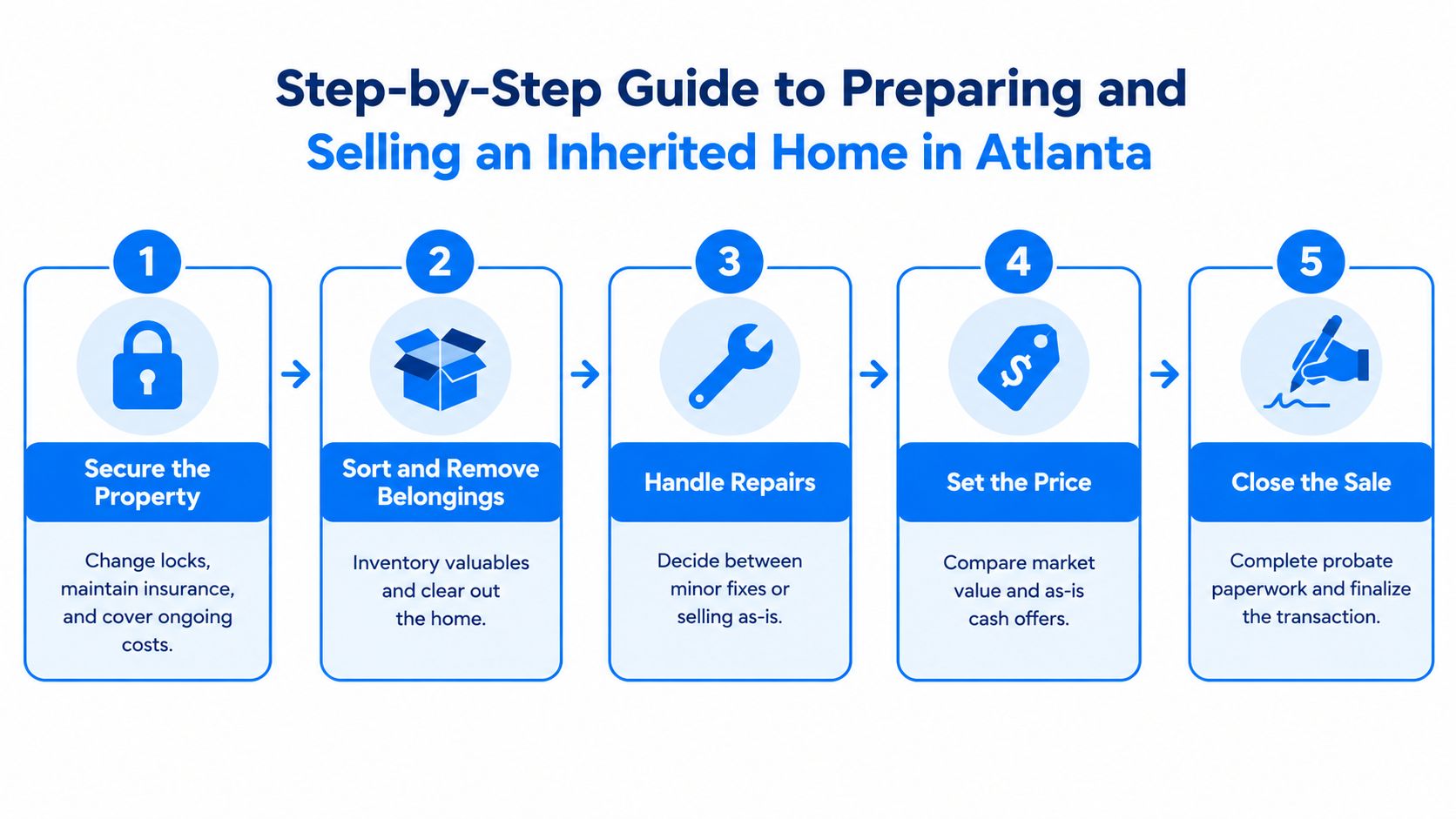
3. Inventory belongings and assess condition
Photograph the home before removing contents. Separate legal and financial records, sentimental items, valuables, hazardous materials, and ordinary household goods. Agree in writing on who can remove what, especially when multiple heirs are involved.
Then inspect the roof, HVAC, plumbing, electrical systems, foundation, exterior drainage, and visible water damage. If you are considering improvements, focus on work that changes buyer confidence or prevents a defect from worsening. A practical resource such as Flacks Flooring's selling guide can help evaluate whether flooring work is likely to support the chosen sale strategy.
4. Price the property and prepare for closing
Obtain a current comparative market analysis, an as-is estimate, and a written cash proposal if that route interests the family. Compare each option after deducting repairs, carrying costs, selling expenses, liens, mortgage payoff, and estate obligations.
Finally, confirm who signs the contract and deed, provide the closing attorney with the estate documents, and plan how proceeds will be held and distributed. Estate funds may need to cover valid obligations before beneficiaries receive their shares.
Comparing Your Sale Options, Agent, As-Is, or Cash
The best sale method depends on the property's condition, the family's capacity, and the estate's need for certainty. Don't compare only the offer price. Compare the net proceeds, time exposure, work required, and probability of closing.
Traditional agent listing
An agent listing is usually the strongest fit when the home is reasonably maintained, the title path is clear, and the estate can tolerate inspections, buyer negotiations, and a longer preparation period. Broad market exposure can help maximize price, particularly when the property appeals to owner-occupants who want a move-in-ready Atlanta home.
The drawbacks are practical. The family may need to clean out decades of belongings, coordinate repairs, stage the property, keep it available for showings, and respond to inspection requests. A financed buyer can also introduce appraisal, underwriting, and repair-related uncertainty.
As-is MLS listing
An as-is MLS listing keeps the property visible to the broader buyer market without promising that the estate will renovate it. This can work well for an outdated home with manageable defects, especially when the family wants multiple buyers to evaluate the opportunity.
“As-is” doesn't mean “no disclosures” and doesn't prevent inspections. It means the seller isn't agreeing in advance to complete every requested repair. The listing still needs accurate information about known conditions, ownership, occupancy, probate status, and material title concerns. Price the home for its condition instead of pricing it as though the repairs have already been completed.
Direct cash buyer
A direct cash buyer may fit a house with major repairs, heavy contents, vacancy concerns, tenant complications, or an urgent estate timetable. The seller may avoid renovation, repeated showings, and financing contingencies. The trade-off is that the price may be lower than the highest possible retail result because the buyer is taking on repair, holding, and resale risk.
Compare proposals carefully:
- Price and deductions: Ask whether the offer is net of repairs, transaction charges, liens, and other expenses.
- Proof of funds: Request evidence that the buyer can close with cash or committed private funds.
- Contract terms: Review inspection rights, assignment language, contingencies, and cancellation provisions.
- Closing control: Confirm the proposed date and whether the buyer can work with the estate's documentation.
- Title process: Make sure a reputable title company or closing attorney will verify authority and clear liens.
A cash offer changes the financing question, not the title question.
An estate should obtain more than one opinion when the property has substantial value or the family is divided. A resource comparing companies that buy houses for cash in Atlanta can help generate questions, but the estate should independently verify each buyer and have the contract reviewed when the circumstances are complex.
Get a cash offer for your home
Navigating Probate, Title Issues, and Taxes
Probate is the court-supervised process used to validate a will, identify heirs, appoint an estate representative, address debts, and authorize actions when required. It doesn't automatically mean the house must sit untouched until the entire estate is closed. The representative may be able to prepare or market the property, but the contract and closing still depend on authority, court requirements, and marketable title.
What commonly delays an Atlanta closing
A buyer may be ready, yet the sale can stall because the estate has:
- An unclear will: Missing originals, conflicting versions, or a contested document can prevent easy appointment.
- Unknown or unreachable heirs: The court and title company may need a complete heirship record.
- Disagreement among heirs: One person may want repairs, another may want a quick sale, and another may reject the proposed price.
- Unpaid obligations: Property taxes, mortgages, HOA balances, judgments, and contractor claims may need payment or release.
- A title defect: An unreleased mortgage, incorrect deed, missing recording, or ownership mismatch can block title insurance.
- Trust or co-owner complications: The closing attorney must verify the trustee's powers or determine which owners must sign.
A preliminary title search is more valuable than a late promise of speed. Ask the closing attorney what documents are missing, which debts must be paid, and whether a court order is needed before accepting an offer. The practical issue isn't merely whether the property is “in probate.” It's whether the estate can deliver a deed that a buyer and title insurer will accept. Guidance on selling a home in probate can help frame the questions for that conversation.
How inherited property taxes work
Georgia stopped imposing a state estate tax effective July 1, 2014, and the Georgia Department of Revenue says Georgia no longer requires a Georgia estate-tax return for applicable estates. Georgia also has no inheritance tax, so receiving the Atlanta house generally doesn't create a separate state tax bill for the beneficiary. That doesn't eliminate federal estate-tax rules or income-tax consequences from a later sale. Review the distinction with the Georgia Department of Revenue estate-tax guidance.
For federal income-tax purposes, inherited property generally receives a basis tied to its fair market value on the date of death. The personal representative may use an alternate valuation date only when the estate files Form 706 and makes the required election, and special-use valuation can apply in limited circumstances. An appraisal or other defensible date-of-death valuation belongs in the estate file, as explained in IRS Publication 559.
A simple example works without guessing at a tax rate. If the documented fair market value on the date of death is the inherited basis, and the property later sells for more than that basis after allowable adjustments, the difference may be a taxable gain. If the sale price is close to the documented basis, the gain may be limited, but selling expenses, improvements, ownership structure, estate reporting, and the actual records still matter. The IRS generally directs taxpayers who must report the sale to use Form 8949 and Schedule D, so retain the appraisal, closing statement, improvement invoices, and selling expenses. IRS Publication 551 also explains how estate-tax reporting and Schedule A to Form 8971 can affect a beneficiary's basis.
Local Considerations and Next Steps for Heirs
Atlanta isn't one uniform housing market. A renovated property in a walkable in-town neighborhood may attract a different buyer pool from an aging suburban house, a condominium with association rules, or a vacant property needing major systems work. The valuation should reflect the specific neighborhood, condition, occupancy, and title status rather than the decedent's purchase price or a tax-assessor value.
Recent Atlanta market data places the median sale price around $427,000, with homes averaging approximately 57 days on market. The median sale-to-list ratio was about 0.985, meaning the typical closed price was roughly 98.5% of the final list price, according to Zillow's Atlanta home-value data. Those figures are benchmarks, not a promise for an inherited home. A probate-tied, damaged, tenant-occupied, or outdated property may perform very differently.
Atlanta resources and property checks
For a Fulton County property, start with the Fulton County Probate Court when the decedent lived in the county and probate jurisdiction belongs there. Confirm the correct court and filing requirements rather than assuming the property's location alone determines venue. The county tax and recording offices, the HOA or condominium association, the mortgage servicer, and the closing attorney each control different pieces of the transaction.
Ask about:
- County records: Verify the last recorded deed, liens, tax status, and any recorded estate documents.
- Association requirements: Obtain HOA or condominium balances, transfer requirements, resale documents, and pending assessments.
- Atlanta-area condition risks: Check drainage, roof wear, humidity-related damage, aging plumbing, foundation movement, and neglected exterior maintenance.
- Personal property: Decide in writing what stays, what family members remove, and what the buyer receives at closing.
- Out-of-state coordination: Use a shared document folder, schedule remote signing with the closing attorney, and keep every heir informed in writing.
If heirs disagree, document the proposed price, repairs, belongings plan, and deadlines. An estate attorney or mediator can help before a disagreement becomes a title or court problem. For legal authority, disclosure obligations, federal basis, or withholding questions, use qualified Georgia legal and tax professionals. This article is general information, not legal or tax advice.
If the estate needs an as-is alternative, Cyber Homes evaluates inherited Atlanta houses, can make a cash offer without requiring repairs or showings, and lets the seller discuss a preferred closing date through the title process. Visit Cyber Homes to request an evaluation, then confirm estate authority, title requirements, and tax questions with qualified local professionals.

Edited by
James Vasquez
Real Estate Investor & Land Specialist with 10+ years experience in residential flipping, vacant land investing, land wholesaling, and subdivision deals.
Disclaimer: The information provided is for educational purposes and does not constitute financial or legal advice. Always consult with licensed professionals before making investment decisions.