Selling an Inherited Property in Phoenix, AZ: Complete Guide
Updated for 2026
A family member has died, and now you're responsible for a Phoenix house, its bills, its belongings, and decisions nobody expected to make quickly. You may be wondering whether you can sell the property immediately, whether probate is required, and whether an agent, an as-is listing, or a cash offer makes the most sense.
Selling an inherited property in Phoenix, AZ is possible, but the first step isn't choosing a buyer. It's confirming who has legal authority to sell and whether the title must pass through probate, a trust, a beneficiary deed, joint ownership, or another Arizona transfer process. This article is general information, not legal or tax advice. Estate and tax rules depend on the documents, ownership history, and facts of your situation.

Get a cash offer for your home
Can You Sell an Inherited Property Right Away
Suppose a parent owned a house in Phoenix alone, left a will, and named one child as executor. The child may be the person expected to manage the estate, but being named in the will doesn't automatically mean they can sign a listing agreement or deed. The required court appointment or other proof of authority must be in place before a title company can usually insure the transfer.
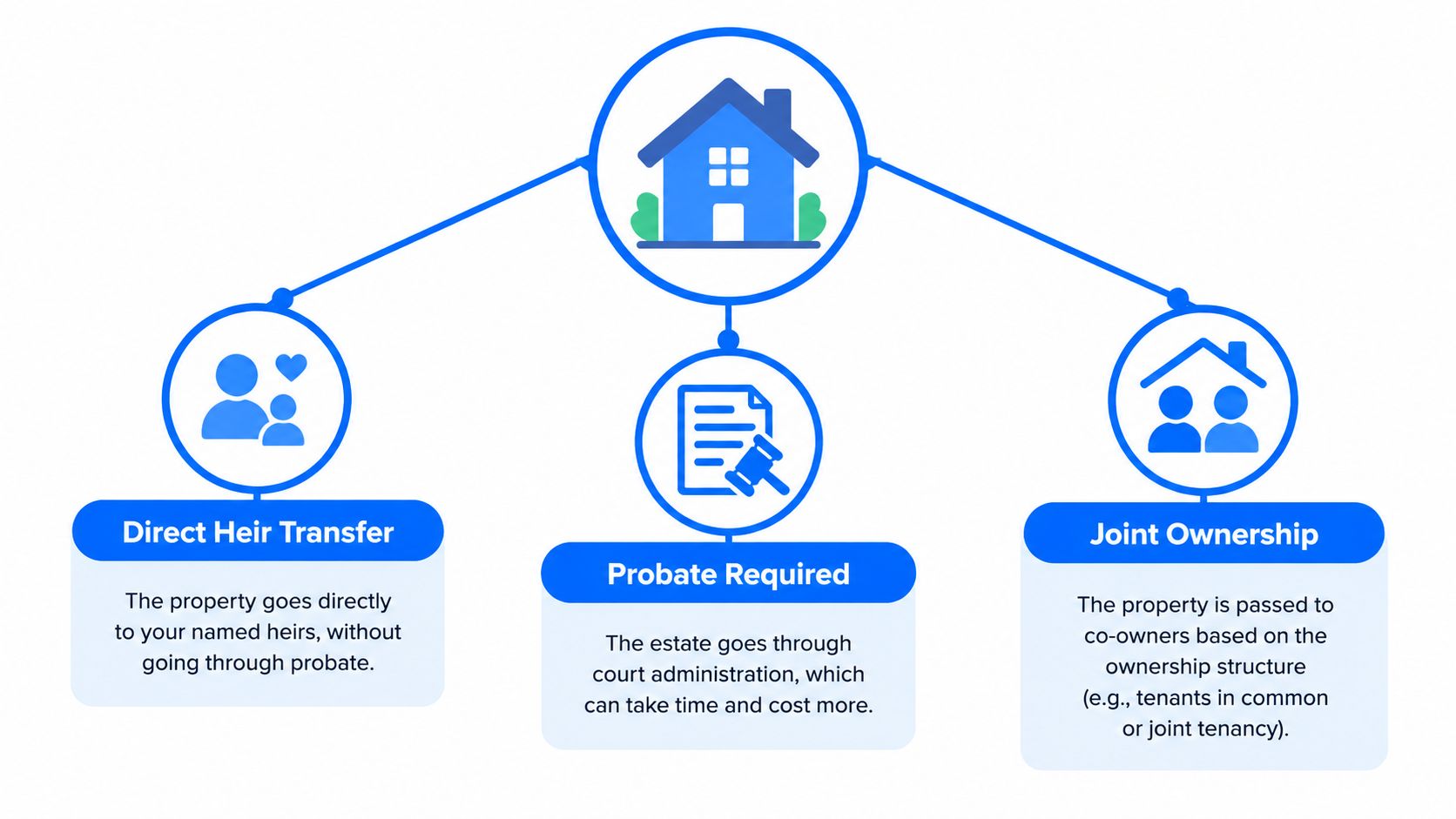
The answer changes depending on how the property was owned when the owner died.
The ownership path determines the next step
-
A will and a court-appointed executor: The will identifies the intended beneficiaries, but the court generally appoints a personal representative, often called an executor, to act for the estate. That representative may be able to market and sell the home during probate, subject to Arizona law, court requirements, and the title company's review.
-
No will and an appointed administrator: Arizona intestacy rules determine who inherits when there's no valid will. A court-appointed administrator handles the estate and may have authority to sell, but the appointment and supporting documents must be established first.
-
A revocable living trust: If the home was properly titled in a revocable living trust, the successor trustee can generally transfer or sell it without opening probate. The trustee still needs to provide the trust and evidence of authority to the title company.
-
Joint ownership with survivorship rights: A surviving owner may receive the property outside probate, depending on the deed and ownership language. The surviving owner will usually need to record the appropriate death-related documents before selling.
-
A recorded beneficiary deed: Arizona law allows a beneficiary deed to transfer real estate at death when it was properly recorded before the owner died. The deed remains subject to mortgages, liens, contracts, and other encumbrances. The Arizona beneficiary deed statute explains the legal mechanism and recording requirement.
-
Multiple heirs who own the property together: The heirs may need to agree on the sale, sign the required documents, and decide how to handle repairs, belongings, pricing, and proceeds. An executor or administrator's role differs from that of several heirs who now hold title directly.
Authority and closing readiness are different
A person can have authority to manage an estate without having given the title company everything it needs to close. For example, an appointed personal representative may have power to sell during probate, while the closing still waits for certified court documents, a death certificate, a deed review, lien releases, or confirmation that all required parties received notice.
Arizona also has a small-estate affidavit route for qualifying real property. Maricopa County materials reference a $300,000 net-real-estate threshold, and the real-property route is generally available only after six months from death, according to Arizona inherited-property guidance. A Phoenix home may exceed that threshold, particularly in light of current local sale prices, so ask an Arizona estate attorney or title company which path applies before signing a contract.
Practical rule: Don't assume that probate automatically prevents a sale, and don't assume that being named in a will automatically gives you signing authority.
Understanding the Phoenix Housing Market for Inherited Homes
Phoenix market conditions affect the choice between a conventional listing and a faster off-market sale. A family may want to sell quickly because the property is vacant, insurance is complicated, relatives live elsewhere, or the estate needs to be settled. The market still matters because speed can come with a lower price, while a traditional sale may require preparation and patience.
Over the three months ending in August 2026, Phoenix homes sold for a median price of $455,000, and properties spent an average of 57 days on the market, according to Redfin's Phoenix housing market data. That average concerns market exposure, not the entire probate and closing process, so heirs shouldn't treat it as a guaranteed selling timeline.
What the numbers mean for an estate
A nearly two-month average marketing period can be meaningful when the home needs ongoing utilities, maintenance, insurance, or mortgage payments. It also gives a family time to compare repair estimates, establish a realistic list price, and determine whether the likely additional proceeds justify the work.
Phoenix sales activity remains substantial. 4,178 homes sold in August 2026, compared with 4,020 a year earlier, while nearby Phoenix data showed a $420,000 median sale price and a $453,297 median list price in the same 2026 market snapshot. These figures don't predict what a particular inherited home will sell for, because condition, neighborhood, title status, and buyer demand vary widely.
The practical lesson is not that every heir should list with an agent. It's that urgency shouldn't replace valuation. A home with a clear title, desirable location, and manageable repairs may justify broad buyer exposure. A property filled with belongings, needing major work, or facing carrying-cost pressure may justify comparing an as-is or direct-sale option.
A useful Phoenix pricing conversation
Ask for three estimates rather than one:
- As-is market value, based on the current condition.
- Likely repaired value, supported by local comparable sales and realistic contractor estimates.
- Expected net proceeds, after mortgage payoff, liens, repairs, selling expenses, and closing costs.
That comparison helps heirs evaluate the trade-offs. A higher list price isn't automatically better if repairs consume proceeds or the property remains vacant while the estate waits.
Comparing Selling Options for Inherited Phoenix Properties
There's no single correct way to sell an inherited Phoenix house. The right choice depends on the property's condition, the family's tolerance for repairs and showings, the estate's authority to sell, and the amount of time available.
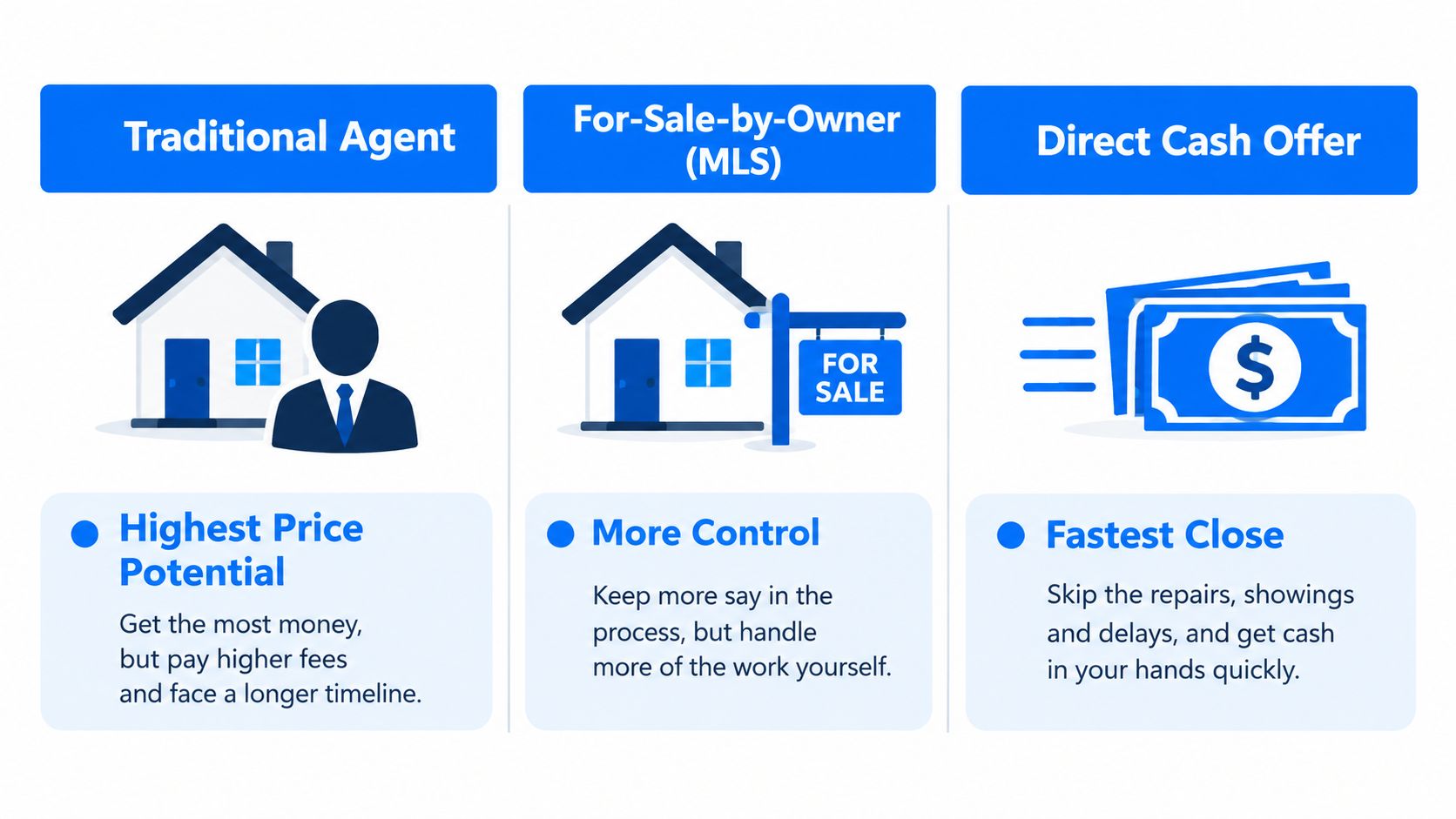
| Option | Best For | Key Considerations |
|---|---|---|
| Traditional agent listing | A home in good condition when price exposure matters | May involve preparation, showings, negotiations, buyer inspections, and financing-related delays |
| As-is MLS listing | A home needing work when the family still wants broad buyer exposure | “As-is” describes the property condition, not ownership, title, lien, or disclosure requirements |
| Direct cash offer | Major repairs, inherited clutter, vacant homes, or a need for a simpler transaction | Compare the net proceeds, verify proof of funds, and recognize that convenience may come with a lower price |
Traditional listing
An agent can help establish a pricing strategy, coordinate photography and showings, market the property, and negotiate with buyers. This path may fit a clean, maintained home where the heirs can wait for buyer interest and manage the preparation process.
The trade-off is effort. Family members may need to remove belongings, authorize repairs, keep the property presentable, respond to inspection requests, and coordinate with the estate representative. A listing also won't solve a missing deed, unresolved probate authority, or unpaid lien.
As-is MLS sale
An as-is listing can widen buyer exposure without requiring the family to renovate every room. It may attract buyers who understand older homes or repair projects, but those buyers may still inspect the property and request concessions.
Selling as-is doesn't mean hiding known problems. Seller disclosure obligations depend on the facts, the seller's role, and applicable law. The estate representative should ask a qualified real estate professional and attorney how disclosures should be handled.
Direct cash offer
A direct cash sale can reduce repairs, showings, and financing contingencies. It may suit heirs who live outside Arizona, a home with substantial deferred maintenance, or an estate that values a simpler transaction over maximum market exposure.
Compare more than the headline offer. Ask whether the buyer has proof of funds, who selects the title company, what costs each party will pay, whether the contract can be assigned, and whether the proposed closing date fits the estate's authority. Families can also review companies that buy houses for cash in Phoenix as part of their research, without treating any offer as automatically suitable.
Get a cash offer for your home
Step-by-Step Process to Sell an Inherited House
The process becomes easier when the family separates property care, legal authority, and sale strategy. Consider a Phoenix home that is vacant and still contains the former owner's furniture. The first job isn't scheduling a showing. It's preventing damage, protecting the asset, and finding the documents that show who can act.
Start with the house and records
-
Secure the property. Check locks, windows, plumbing, air-conditioning, landscaping, and signs of leaks or vandalism. Keep necessary utilities operating when they protect the home.
-
Maintain insurance. Tell the insurer that the owner has died and explain whether the home is vacant, occupied, or being prepared for sale. A policy may have specific vacancy or estate requirements.
-
Gather records. Locate the death certificate, will, trust, deed, tax statements, mortgage information, insurance details, HOA records, repair receipts, and any prior appraisal.
-
Confirm authority. Determine whether the property passes through a trust, beneficiary deed, survivorship ownership, probate, or a qualifying affidavit. If probate is required, the personal representative or administrator must obtain the proper appointment and authority.
-
Order title work. A title company can search for mortgages, unpaid taxes, judgments, liens, HOA balances, old releases, and ownership defects. This is the step where legal authority becomes closing readiness.
The family can then decide whether to repair, list traditionally, market the home as-is, or compare a cash offer. Get a realistic value estimate and subtract known obligations before choosing.
The price that matters is the estimated amount the estate receives after liens, payoffs, repairs, selling expenses, and closing adjustments.
At closing, the authorized seller signs the deed and other documents. The title company pays approved obligations from the proceeds, and the remaining funds are distributed according to the will, trust, intestacy rules, or court requirements. For additional context, see this guide to selling inherited property.
The following video can help families visualize the general estate-sale process, but it doesn't replace advice about an Arizona property.
Probate, Title Issues, and Tax Basics for Heirs
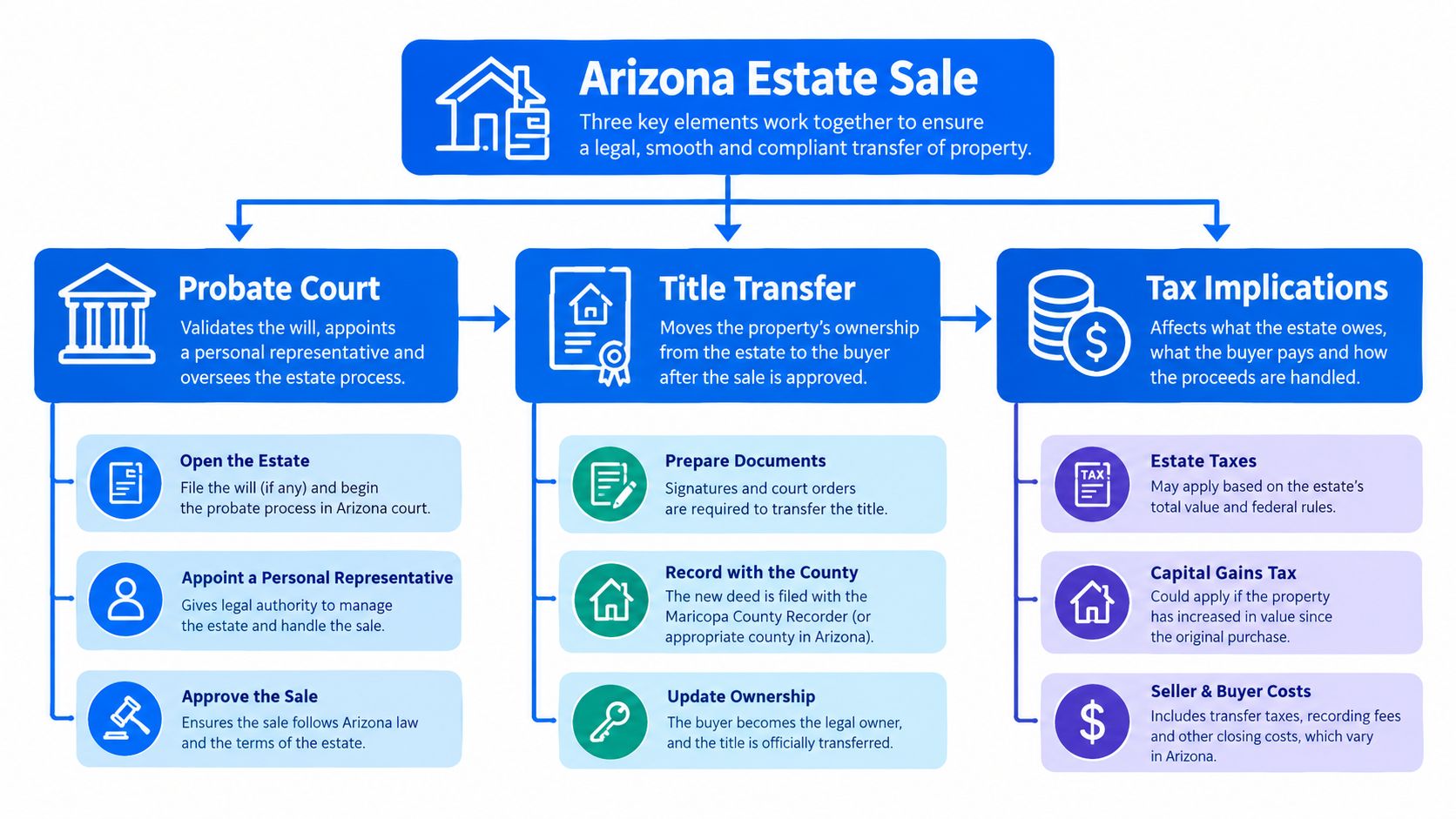
Probate is the court-supervised process that establishes authority, addresses estate obligations, and transfers property according to the will or Arizona inheritance rules. It isn't identical to a mandatory waiting period before any marketing can begin. Depending on the ownership structure and court authority, a personal representative may be able to market or sell during probate.
The closing question is more specific: Can the authorized person convey marketable title, and will the title company insure the buyer's ownership?
The main Arizona title paths
- Probate transfer: A court-appointed personal representative may convey the property with the required estate documents and deed.
- Trust transfer: A successor trustee may transfer trust-owned property when the trust and trustee authority are documented.
- Beneficiary deed: A properly recorded deed can transfer the property at death, followed by the required recording of death-related evidence.
- Small-estate affidavit: A qualifying estate may use the Arizona real-property affidavit process, subject to the applicable waiting period and threshold.
A title company may require a certified death certificate, court appointment, trustee certification, beneficiary deed documents, affidavits, lien releases, and other evidence. The title search can reveal problems that have nothing to do with the home's physical condition, such as a prior mortgage that was never released or an old judgment attached to the owner.
Arizona's real-estate small-estate threshold is $300,000, and the property affidavit route generally requires waiting six months after death, as described in Arizona estate-planning guidance for inherited property. A lawyer or title professional should confirm whether the threshold is measured against the estate's net real-estate value and whether another transfer route applies.
The step-up in basis
Federal tax law generally resets inherited property's basis to its fair market value on the decedent's date of death under Internal Revenue Code Section 1014. The tax explanation for selling inherited property in Arizona describes why this evidence matters.
For a simple example, assume an appraisal establishes the Phoenix home's date-of-death value at $420,000. If the estate later sells it for $430,000, the starting point for measuring post-death gain is generally the date-of-death value, not what the original owner paid decades earlier. Selling costs and other adjustments can affect the final calculation, so keep the appraisal, valuation records, repair invoices, and closing statement.
Arizona doesn't impose a state inheritance tax or state estate tax, according to Arizona inherited-property tax guidance. That doesn't eliminate possible federal, income-tax, property-tax, lien, or capital-gain questions. A CPA should review the facts when the property value, later appreciation, trust structure, or estate tax exposure is significant. Families can also review practical probate-sale considerations in this guide to selling a home in probate.
Get a cash offer for your home
Documents You Need and Common Scenarios
A missing document can delay a sale even when the family agrees on the price. Start a shared digital folder and a physical file, then give the title company enough information to identify gaps early.
Practical document checklist
- Death certificate: Provide the certified version required by the court, recorder, lender, or title company.
- Will and trust documents: Include amendments, schedules, successor-trustee information, and related estate paperwork.
- Court appointment documents: Gather letters of appointment, orders, and any authority granted to the personal representative or administrator.
- Deed and property tax records: Confirm the record owner, legal description, parcel information, and current tax status.
- Mortgage payoff statement: Ask the lender for the current payoff process, including any home-equity loan or reverse-mortgage balance.
- HOA documents: Collect account statements, contact details, transfer requirements, and any balance or violation notices.
- Insurance records: Keep the policy, claim history, vacancy communications, and information about recent damage.
- Repair and improvement records: Save invoices, permits, warranties, contractor details, and records that support the property's condition or tax basis.
- Title and lien information: Include prior title policies, releases, judgments, tax liens, and other ownership documents.
- Government-issued identification: The executor, administrator, trustee, surviving owner, or other authorized seller will need acceptable identification.
Common complications
A home may be in probate, held by a trust, occupied by a tenant, subject to foreclosure activity, affected by divorce-related ownership, or tied to an unresolved family dispute. Each situation changes the documents and people who must participate.
Multiple heirs should document decisions in writing. If one sibling wants repairs and another wants an immediate sale, obtain an independent valuation and written repair estimates before arguing over preferences. If communication breaks down, an estate attorney or mediator can help the family address price, timing, belongings, and distribution before the disagreement becomes a court dispute.
An as-is sale can reduce physical work, but it doesn't eliminate title clearance, lien resolution, authority requirements, or applicable disclosures. The title company should review the file before the family relies on a proposed closing date.
Next Steps and When to Get Professional Help
Begin with a short authority and title meeting. Ask an Arizona estate attorney, title officer, or qualified real estate professional:
- Who is authorized to sign for the property?
- Is the home in probate, a trust, joint ownership, or a beneficiary-deed arrangement?
- What documents must be recorded before marketing or closing?
- Are there mortgages, unpaid taxes, HOA balances, liens, or judgments?
- Who must sign the listing agreement, purchase contract, deed, and closing affidavit?
- How should personal belongings and sale proceeds be handled?
- What valuation records should the CPA use?
Keep the date-of-death valuation, appraisal, repair and improvement records, payoff statements, receipts, and final closing statement. Tax rules vary with the estate structure, the property's basis, selling costs, later appreciation, and the seller's personal circumstances. A CPA or tax professional should review the transaction when the tax exposure or property value is significant.
Frequently asked questions
Can I sell an inherited house before probate is complete
Sometimes the property can be marketed or an offer can be negotiated during probate, but closing depends on the personal representative's appointment, authority, court requirements, and title underwriting. Don't sign as though you own the home personally unless a qualified professional confirms that you can do so.
Do all heirs have to agree to sell
If several heirs own the property directly, their signatures or another legally valid solution may be required. If an executor or administrator has authority to act for the estate, the process may differ. Disagreements about price or timing should be addressed with written communication, legal advice, or mediation.
Can an executor sell an inherited house
An executor can often sell estate property after the court appoints the executor and the applicable authority is established. The will alone may not be enough for a title company to close the transaction.
Can I sell an inherited house as-is
Yes, an inherited home may be sold as-is through an MLS listing or direct sale. “As-is” doesn't remove ownership, title, lien, or applicable disclosure obligations.
What happens if the inherited home has a mortgage
The mortgage remains an estate obligation that must be addressed. Payments, lender communication, and the payoff amount matter, and the balance is commonly paid from sale proceeds at closing if the home is sold.
Do I have to pay taxes when I sell inherited property
You may have property taxes, lien payments, closing costs, or capital-gain questions. The federal step-up in basis can limit taxable post-death gain, but only a tax professional can calculate your actual result.
What documents are needed to sell an inherited house
Expect to provide documents proving death, ownership, estate authority, identification, taxes, mortgages, liens, insurance, HOA status, and property history. The title company can provide the exact closing checklist.
Can an out-of-state heir sell a property remotely
Often, much of the process can be coordinated remotely through an attorney, title company, real estate professional, electronic document process, and approved notary arrangements. Confirm the signing method before accepting an offer.
How long does it take to sell a probate property
There's no universal timeline. The answer depends on the estate structure, court activity, heir cooperation, title defects, lender requirements, property condition, and selling method. Ask the local professionals handling your file for a case-specific estimate.
Should I use an agent or accept a cash offer
Use an agent when broad market exposure and potential price are priorities and the property can be prepared. Consider an as-is or cash option when repairs, clutter, vacancy, distance, or certainty matter more, but compare the net proceeds and verify the buyer's funds and closing process.
If you're ready to evaluate the property, first confirm estate authority, title requirements, and tax questions with qualified local professionals. Then compare a conventional listing, an as-is sale, and a written cash offer using the amount the estate would receive, not just the advertised price.
Cyber Homes offers as-is cash purchases for inherited Phoenix properties, which can help families compare a direct-sale option when repairs, showings, or distance create difficulties. Visit Cyber Homes to share the property details and discuss a potential sale through a reputable title and closing process.

Edited by
James Vasquez
Real Estate Investor & Land Specialist with 10+ years experience in residential flipping, vacant land investing, land wholesaling, and subdivision deals.
Disclaimer: The information provided is for educational purposes and does not constitute financial or legal advice. Always consult with licensed professionals before making investment decisions.