
How to Sell a House As-Is for Cash in Tennessee (2026)

Selling a house as-is for cash in Tennessee means accepting a buyer's offer on the home in its current condition, with no repairs, staging, or open houses. Cash offers in Memphis, Nashville, and Knoxville often land between 50 and 85 percent of market value, depending on condition, and most close within 7 to 30 days.
Updated October 2026
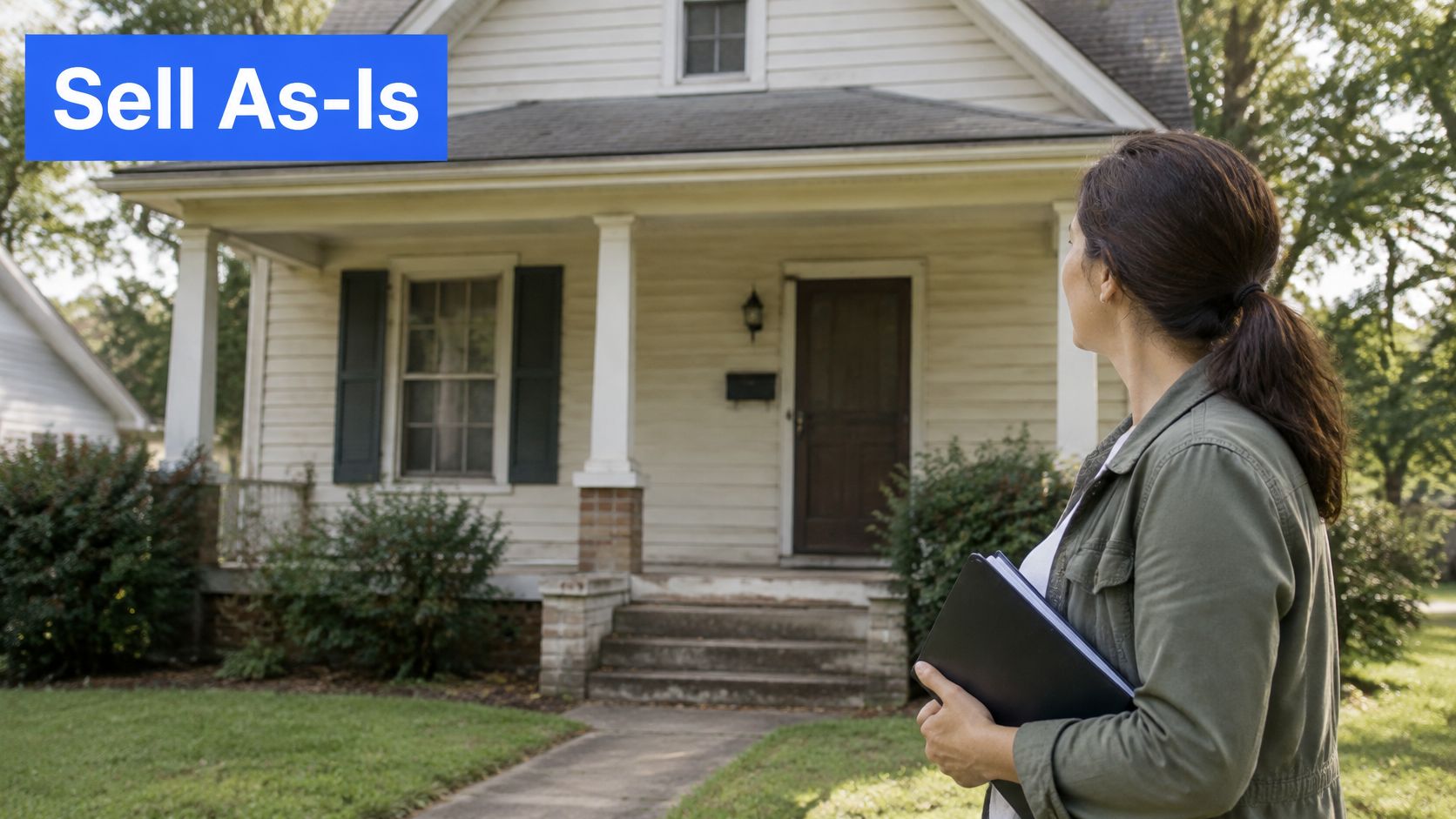

Why Would a Seller Trade Upside for Speed?
Here's the honest version of the trade. You give up some of the upside a retail listing might bring, and in return you get speed, far less prep work, and a closing date you can actually count on.
Median prices for Memphis, Nashville, or Knoxville are useful as a reference point, but they don't tell you what your house is worth. Condition, layout, and street do most of the work in deciding where your number lands.
A cash offer isn't automatically the best offer, either. Before you sign anything, run the numbers against what a listing could realistically net after repairs, agent commissions, and closing costs.
A fast cash sale is a trade, not a discount you've been handed. Know what you're giving up before you say yes.
Where This Route Fits Best
Cash sales often make the most sense for inherited homes in Frayser or Whitehaven in Shelby County, especially when the heirs live out of state. They also work well for a move out of Antioch in Davidson County, where timing matters more than squeezing out every last dollar. Older homes in Fountain City or Bearden in Knox County with deferred maintenance are another common case.
What Is the Local Market Like for As-Is Sellers?
Market conditions change month to month, so verify current figures before you price. Look up the median sale price, average days on market, and months of inventory in your city and county from your local Realtor association or Tennessee Realtors market reports, and note the reporting month. Generally, under about six months of inventory leans toward a seller's market, while more supply leans toward a buyer's market.
This guide walks through offer math, how to vet buyers, and the legal duties that still apply in a typical Tennessee as-is sale.

How Do Cash Buyers Calculate Their Offer?
Cash buyers almost always work backward. They start with the after-repair value, which is what the house will likely sell for once it's fixed up and listed. From there, they subtract the cost of getting it into shape and the profit they need for taking on the risk.
The Inputs Behind the Number
Repair costs are the deduction everyone notices first. A buyer walks through the house and estimates materials and labor. Experienced buyers usually pad that figure, because older homes have a way of hiding problems behind drywall.
Holding costs are the quieter expense. These include loan interest, property taxes, insurance, and utilities for every month the house sits empty during the rehab and resale.
How the 70% Rule Works
The 70% rule is a quick shortcut many investors rely on. Multiply the after-repair value by 0.70, then subtract the repairs. What you get is a rough ceiling, not a guaranteed price.
Here's a hypothetical Nashville-area house to make it concrete. Say the after-repair value is $360,000 and repairs come to $40,000.
The math is simple: 0.70 × $360,000 = $252,000. Subtract $40,000 and the maximum offer lands near $212,000. That gap between the offer and the resale price is supposed to cover holding costs and profit.
Seller Net Sheet Worked Example (Hypothetical Nashville-Area Home)
All figures below are hypothetical. The table walks through the same example line by line, showing how a headline offer shrinks once the bills come due.
| Line Item | Example Amount | Notes |
|---|---|---|
| Cash offer (hypothetical) | $212,000 | Maximum offer from the 70% rule |
| Less mortgage payoff (illustrative) | −$150,000 | Principal, accrued interest, and fees |
| Less title, escrow, and recording | −$3,000 | Estimate; varies by title company |
| Less property tax proration | −$800 | Depends on closing date |
| Less utility and other prorations | −$200 | Estimate |
| Estimated seller net | $58,000 | Before any agreed credits |
Seen this way, the $212,000 offer looks a lot smaller, and that's exactly why it pays to run the numbers early.
Why the Net Sits Below the Headline Offer
The headline number is rarely what lands in your account. The mortgage payoff comes out first, and it usually includes accrued interest and fees on top of the principal.
Closing costs and prorations take another slice. Property taxes and utilities get split by closing date, so the final figure shifts depending on when you close. Ask a title company for a written estimate before you sign anything.
How Much Will a Cash Buyer Pay Based on Condition?
Condition affects the offer more than any single percentage. Two houses on the same Memphis street can get very different numbers, and the difference is often whether one needs a coat of paint or a new roof.
Light Repairs Keep Offers Near the Top
Paint, worn flooring, and minor fixtures usually keep offers at the high end. Buyers see these as cheap, quick jobs, so they rarely knock much off the number.
Moderate Repairs Pull Offers Lower
An aging HVAC system or a water heater that needs replacing will drag offers down. Buyers can't wave off big-ticket items like these. A failing AC unit has a way of showing up during Memphis summer inspections.
Heavy Repairs Push Offers Furthest Down
Buyers discount these problems the most:
- Foundation movement
- Hail-damaged roofs
- Fire, flood, or water damage
Clay soils in middle Tennessee often cause foundation shifts, and hail hits roofs across the state. Older Knoxville homes frequently deal with frozen and burst pipes, and those repairs add up fast. Flood-prone properties may also need insurance and elevation review, which can lower offers further.
Light repairs often land near 75 to 85 percent of market value, moderate near 65 to 75, and heavy near 50 to 65.
Treat those ranges as investor rules of thumb, not quotes. The final number depends on local comparable sales and each buyer's own cost estimates.
Get a Contractor Estimate First
Before you accept any offer, get a written contractor estimate. It shows whether the discount is actually fair or just convenient for the buyer. Many owners start by reading a guide to calculate your remodeling expenses.

Which Selling Path Puts the Most Money in Your Pocket?
Here's the short version. A cash buyer gets you to closing fastest and with the fewest surprises. An agent listing as-is can put a bigger number on paper, but that number has to survive inspections and buyer financing. Fix-and-list only makes sense if you have spare time, spare cash, and the nerve to wait.
| Factor | Cash Buyer | Agent Listing As-Is | Fix-and-List |
|---|---|---|---|
| Net proceeds | Lowest | Highest on paper | Varies widely |
| Fees | Closing costs only | Commission plus closing costs | Commission, closing costs, and repairs |
| Time to close | 7 to 30 days | Several months | Often the longest |
| Repairs | None | None, though buyers may ask for credits | Seller pays |
| Certainty of closing | High | Moderate | Lowest |
Look at the table, then look at your own numbers. The averages rarely tell the whole story.
What Are the Hidden Costs of Each Path?
Why Cash Offers Run Lower
Cash buyers usually pay below market value, and that's the trade. You skip agent commissions, buyer concessions, and months of holding costs. For many owners, that math works out better than it first appears.
When an As-Is Listing Falls Apart
Here's where people get burned. FHA and VA loans come with property condition rules, so a home with a failing roof or a sketchy electrical panel can fail appraisal late in the process. The loan collapses a few weeks before closing, and you're back at square one with a house that has already sat on the market for months.
Where Fix-and-List Goes Wrong
A roof job planned for six weeks has a way of turning into four months. Contractors get backed up, permits drag, and surprises hide behind every wall. Each extra month adds interest, property taxes, and insurance, and those costs can quietly erase your gains.
How to Choose Your Path
Three questions usually point to one option. Answer them honestly before you call anyone.
- Timeline: If you need to close quickly, a cash sale is the obvious fit.
- Condition: Cosmetic wear suits a listing, but structural problems usually favor a cash buyer.
- Cash on hand: Fix-and-list requires money for repairs and holding costs before you see a dollar of sale proceeds.
The right choice depends on the numbers for one property, not the averages for a city.
If you're weighing updates against an as-is sale, this guide on attract Forsyth County buyers with home improvements gives a useful comparison.
Read also: how to spot common we buy houses scams before you sign anything.

What Does the Cash Sale Timeline Look Like?
Most cash sales go from the first phone call to a written offer in about 24 hours. If the title is clean, closing can happen 7 to 30 days later.
From First Call to Written Offer
It starts with a simple conversation. You give the buyer the address, the basics like bedrooms and square footage, and an honest list of known problems. From there, they pull recent comparable sales and estimate what repairs would cost.
Some buyers work entirely from desk research. Others want to walk through the place first, which takes a bit longer but sometimes leads to a firmer number.
After they've run the numbers, you should get a written, no-obligation offer. Read it closely. It should spell out the price, the proposed closing date, and any conditions attached.
Contract, Earnest Money, and Title Search
Once you accept, both sides sign a purchase agreement. The buyer then deposits earnest money with the title company, which holds it in escrow until closing.
Next, the title company runs a title search. This is where liens, judgments, and unpaid taxes come to light. Anything on that list has to be cleared before the deed can transfer, so it's worth knowing what's out there before you're under contract.
How Do I Vet a Cash Buyer Before Signing?
This is the step most sellers rush through, and it's the one that protects you most.
- Proof of funds: Ask for a recent bank statement or a letter from the bank confirming the cash is there.
- Local closing: Make sure the deal closes at a reputable title company you can call yourself.
- Earnest money: Know the amount, when it becomes non-refundable, and under what conditions.
- No upfront fees: If a buyer wants you to pay for appraisals, inspections, or "processing" before closing, walk away.
Some warning signs show up later in the process:
- Price cuts after inspection: A buyer who lowers the offer without pointing to new problems is usually looking for leverage.
- Wholesaling: Ask directly whether the buyer plans to assign the contract. Wholesalers often resell it, so any assignment should be disclosed in writing.
Beyond that, read online reviews, ask for two or three past sellers you can call, and phone the title company yourself to confirm the file is actually open.
A legitimate buyer will welcome these questions. A rushed one will push back.
Before you sign anything, take a look at our cash home buying process guide, especially if the timeline feels like it's moving faster than you'd like.
What If I'm Behind on Payments, Inherited, or Divorcing?
Before you talk price with any buyer, get your paperwork in order and find out whether a foreclosure deadline is already running.
Behind on Payments or in Pre-Foreclosure
Asking for an offer doesn't pause a foreclosure. Filings keep moving on their own schedule.
If you're not sure where you stand, how far behind on a mortgage before foreclosure starts is a good place to get oriented. Then confirm your exact legal deadline with your loan servicer, a Tennessee housing counselor, or an attorney. A buyer's proposed closing date won't tell you what the lender or court requires.
Situations That Change Your Paperwork
Some situations add a stack of documents before a title company will open a file. Inherited properties and divorces are the ones that come up most often.
- Inherited or probate: Court papers showing who has authority to sign for the estate.
- Divorce transfers: A signed settlement or court order naming the owner.
- Tenant-occupied rentals: Lease terms and a clear plan for notice and possession.
- Code violations: Open city or county violations, plus receipts for any corrections. Each city, including Memphis, Nashville, and Knoxville, runs its own code enforcement and vacant-property rules, so check with the local codes office.
- Fire, water, or hoarder damage: Insurance claim files and cleanup invoices.
Can I Sell As-Is If a Mortgage or Liens Remain?
Yes. At closing, the title company pays off the mortgage and any recorded liens out of the sale proceeds. Whatever is left over goes to you.
How Payoff Works at Closing
Before you accept a cash offer, check that the title is clean. Unresolved defects can stall a sale or kill it outright. This overview of resolving Big Island property title disputes shows how these problems typically get cleared, though Tennessee procedures differ.
Do I Still Have to Disclose Defects in Tennessee?
Tennessee's Residential Property Disclosure Act generally requires a seller disclosure unless an exemption applies. Selling as-is doesn't erase that obligation.
Material defects you know about and don't disclose can lead to legal claims, even when the contract says as-is.
Transfer tax in Tennessee is generally $0.37 per $100 of the sale consideration. Tennessee does not generally require an attorney at closing, though many sellers choose one. Rates and requirements can change, so confirm them with a local title company or attorney before you list.
What Documents Should I Gather Before Listing?
Pull these together before listing day. Having them ready tends to speed up everything that follows.
- Deed: Proves ownership and shows the legal description.
- Mortgage statements: Show the current payoff amount and servicer contact.
- Tax bills: Reveal any unpaid balances.
- HOA information: Covers dues and any transfer fees.
- Insurance history: Documents prior claims.
- Repair receipts: Show completed work, permits pulled, and who did the job.
- Identification: A government-issued photo ID for every named seller.
Frequently Asked Questions
Will a cash buyer pay less than market value?
Usually, yes. A cash buyer has to account for repairs, the months they'll carry the property, and their own profit, so the offer typically lands below what a retail buyer might pay. You give up some of the price, but you get speed and savings in return. There are no commissions, and you aren't waiting on a bank appraisal or a financing deal that could fall apart.
Do sellers still need to disclose defects?
Yes, and this is where plenty of sellers get tripped up. Tennessee's disclosure rules still apply in an as-is sale. Leaving a known defect off the form can create legal exposure, even if you never planned to fix it.
Does a mortgage have to be paid off first?
Not always, but the loan has to be satisfied at closing. The title company pays the lender from the sale proceeds, and whatever remains goes to you. If you owe more than the offer, you'll need to bring the difference to closing before the deed transfers.
How does the home-sale exclusion work?
The federal home-sale exclusion can shield up to $250,000 of gain for single filers and $500,000 for married couples filing jointly. To qualify, you generally need to pass an ownership test and a residence test, usually two of the last five years. Your situation may bend those rules, so consult a tax professional before you sign anything.
Can I sell as-is if I'm behind on my mortgage?
Yes, but a buyer's timeline doesn't stop a foreclosure. Confirm your exact deadline with your loan servicer or a Tennessee housing counselor as soon as possible. A cash sale can sometimes close before a foreclosure sale, but only if the payoff and timing work out.
Do I need a real estate agent to sell for cash?
No. Many cash buyers work directly with owners, which removes the commission. An attorney or a title company can handle the closing paperwork, though you should still review every document carefully.
What is the biggest red flag in a cash offer?
A price cut after inspection with no new problems identified is the most common warning sign. Other red flags include requests for upfront fees and unclear plans to assign the contract to someone else. Any legitimate buyer will answer these questions in writing.
Do cash buyers need a title search?
Yes. A title company must confirm the property has no unresolved liens, judgments, or unpaid taxes before the deed transfers. Learning about these issues early gives you time to resolve them before you're under contract.
Disclosure requirements, liens, and transfer taxes vary by location. Check the local rules with a title company or attorney before you commit.
Cyber Homes buys houses for cash in Memphis, Nashville, and Knoxville, with no commissions, no repairs, and offers that usually arrive within 24 hours. Request a no-obligation cash offer whenever you're ready to talk numbers.

Edited by
James Vasquez
Real Estate Investor & Land Specialist with 10+ years experience in residential flipping, vacant land investing, land wholesaling, and subdivision deals.
Disclaimer: The information provided is for educational purposes and does not constitute financial or legal advice. Always consult with licensed professionals before making investment decisions.