Selling an Inherited Property in Memphis, TN Guide
Losing a family member is difficult enough without discovering that the Memphis house now needs insurance decisions, title research, probate paperwork, and a selling plan. Selling an inherited property in Memphis, TN is possible, but the first move isn't calling a contractor or accepting the first cash offer. Confirm who has legal authority to sell, determine whether probate or other title work is required, and protect the property while those questions are resolved.
Memphis also demands realistic financial planning. Redfin reported a median sale price of $187,276 for the three months ending August 2026, down 2.2% year over year, while Zillow placed the median home value at $145,335 in August 2026, down 2.8% year over year. Realtor.com reported a median listing price of about $168,955 in October 2026, showing that asking prices and completed sale prices can differ meaningfully. Redfin's Memphis housing-market data illustrates why heirs should compare likely net proceeds, repair costs, and holding expenses instead of relying on an optimistic listing price.
Updated for 2026. This article provides general information, not legal or tax advice. Tennessee probate, title, disclosure, and tax questions should be reviewed with qualified local professionals.

Get a cash offer for your home
First Steps After Inheriting a Home in Memphis
The first days after an inheritance often feel disorganized. A relative's belongings remain inside, family members live in different states, and nobody is sure whether the house should be cleaned, repaired, occupied, or sold. Resist the urge to make permanent decisions before you know who controls the estate.
Start by protecting the physical property. Change the locks if access is uncertain, secure valuables and important papers, forward the mail, and check for water leaks, roof damage, broken windows, or signs of unauthorized entry. Contact the insurance carrier and explain that ownership has changed and the home may be vacant. A standard occupied-home policy may not handle a vacant property the same way, so ask what coverage and inspections are required.
Practical rule: Protect the house first, spend money second, and list it only after authority is clear.
Create a basic property file. Put the deed, tax notices, mortgage statements, insurance information, utility bills, repair records, keys, and any known estate documents in one secure location. Photograph the condition of the home and record major personal property before relatives remove belongings. That simple inventory can prevent later arguments about what was present and who approved its removal.
Don't rush into repairs
A family member may want to repaint immediately or hire a cleanout company. That can be sensible later, but it can also create a dispute if the person paying for the work doesn't have authority or another heir wanted to preserve, sell, or distribute items inside the home.
Walk through the property with the likely executor, administrator, trustee, or surviving owner. Identify urgent work that protects the asset, such as stopping an active leak or maintaining essential systems, and separate it from cosmetic work designed to improve a listing. Obtain written estimates before approving substantial expenses.
Tennessee has an active inheritance-property pipeline. A September 2026 dataset reported 2,520 newly inherited residential properties in one month, 32,077 over the trailing 12 months, and 138,530 recorded since 2022 across 95 counties. The same data described Memphis as a cool market where homes sold in about 64 days, with a median listing price around $170,000. The reported Tennessee and Memphis inheritance-property data supports a practical conclusion: don't assume an estate home will sell instantly just because it is priced below more expensive markets.
Confirming Your Legal Authority to Sell
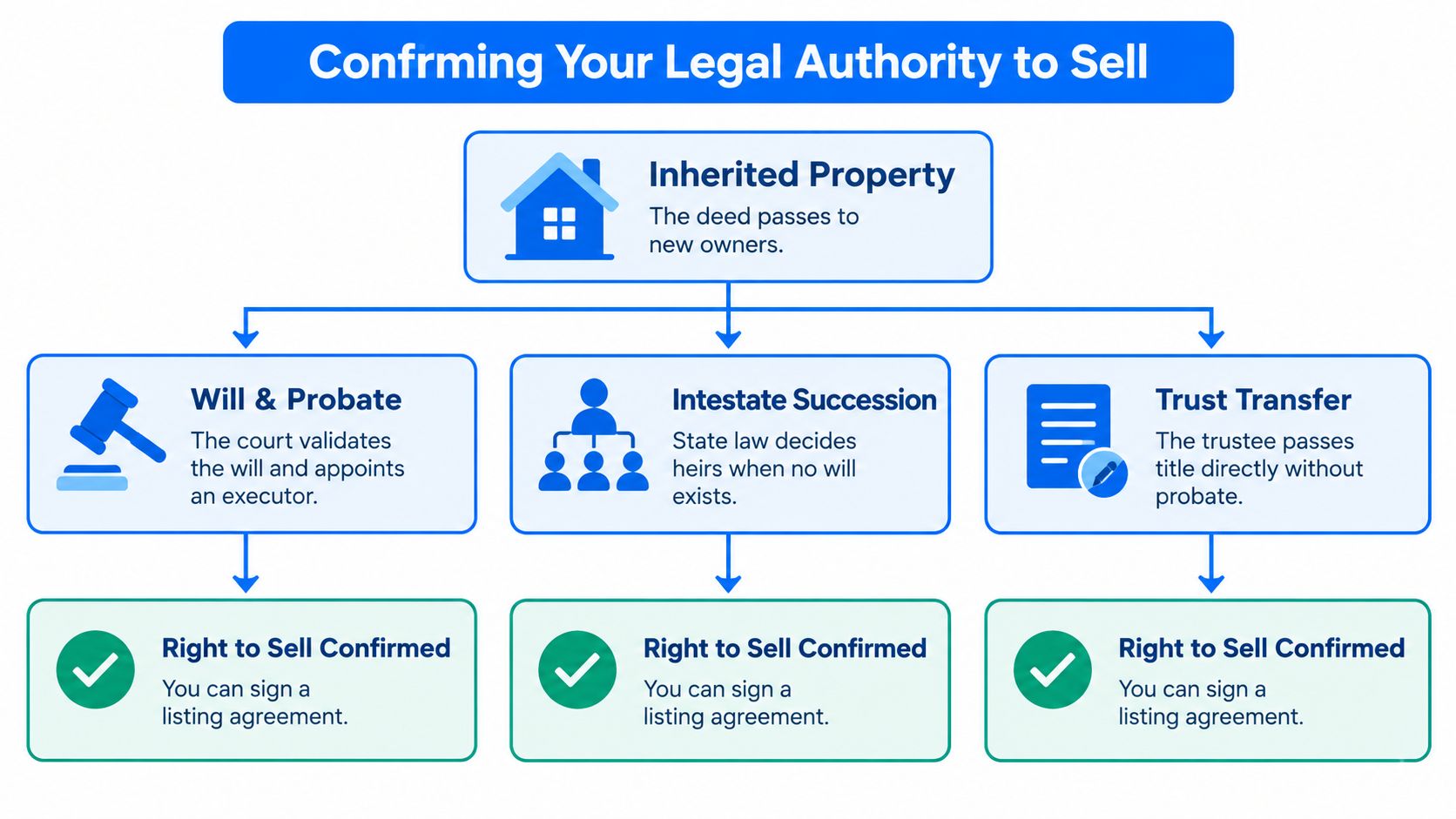
A person can be the closest relative, the named beneficiary, or the family member handling every practical detail and still lack authority to sign a deed. A title company needs recordable proof that the person selling the Memphis property has the right to transfer it.
Identify how the home passed
-
Will and probate: A will usually identifies the intended beneficiaries and may nominate an executor. The probate court still needs to accept the estate and appoint the personal representative. In Tennessee, the executor's authority generally comes from the court's appointment and related documents, not merely from the name printed in the will.
-
No will: The estate is handled under Tennessee intestate succession rules. The court appoints an administrator, who manages estate assets, debts, and the sale process. Family agreement helps, but it doesn't replace the administrator's legal authority or the documents required by the title company.
-
Living trust: If the Memphis property was properly transferred into a living trust, the successor trustee may be able to sell under the trust's terms without opening probate for that asset. The trustee must still provide the trust documents, proof of succession, and any deed or certification the closing company requests.
-
Joint ownership with survivorship rights: A surviving owner may receive the property outside probate, but the deed must be reviewed carefully. Not every form of co-ownership creates survivorship rights.
-
Transfer-on-death deed: A valid transfer-on-death deed can direct the property to a named beneficiary outside ordinary probate. The beneficiary still needs to record the required documents and establish a clean chain of title before closing.
-
Multiple heirs: If the property passes to several heirs as co-owners, the sale usually requires the signatures and cooperation of the people holding the ownership interests, unless a court order or another valid authority changes that result.
Being named in a will doesn't automatically let you sign a listing agreement or deed. Before speaking with an agent or cash buyer, gather the will, death certificate, deed, trust papers if applicable, and any court appointment documents. A Tennessee attorney can explain whether the estate representative may list the house before final distribution and what approval the closing requires.
Understand the fiduciary role
An executor or administrator isn't selling a personal asset. That person must act for the estate, account for debts and expenses, preserve value, and follow the governing documents and court requirements. A trustee has duties under the trust, which may differ from probate administration. For a plain-language discussion of fiduciary duty for Humble executors, review the resource from the Law Office of Bryan Fagan, while remembering that Tennessee-specific advice must come from a Tennessee professional.
Navigating Shelby County Probate and Title Hurdles
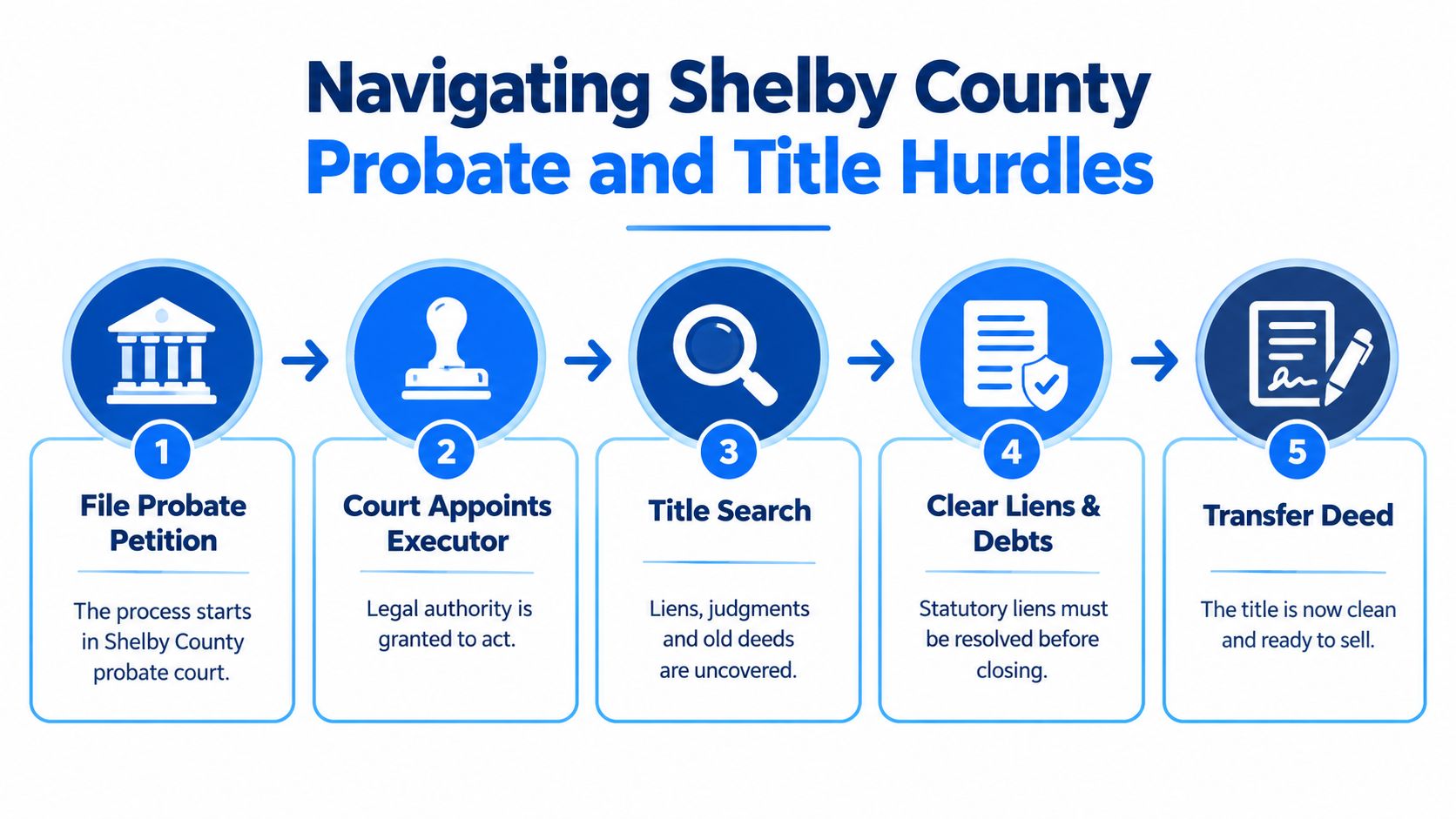
For Memphis heirs, probate is not automatically a command to wait until every estate matter is finished before doing anything with the house. The practical question is whether the person handling the transaction has enough authority to market the property, sign a contract, and convey insured title under the estate's structure and the court's requirements.
Shelby County has a dedicated Probate Court, and estate filings are handled through the Probate Court at 140 Adams Ave in Memphis. The local court's small-estate petition creates a frequent misunderstanding. The procedure applies when total personal property is $50,000 or less, and at least 45 days have passed since death, but real estate is excluded from that cap. The Shelby County small-estate petition makes the distinction clear.
That means an estate can be small for personal-property purposes and still need a formal route or additional heirship evidence to transfer a Memphis house. Don't assume that a small-estate filing alone gives an heir marketable title to residential real property.
Why Tennessee title clearance matters
Tennessee's inheritance tax was repealed for deaths after December 31, 2015, but that doesn't eliminate every estate-related clearance requirement. An estate containing Tennessee real property may still need to release the state's statutory lien and obtain an Inheritance Tax Consent to Transfer before the property can be transferred or sold cleanly. The return is due within nine months of death when the estate is in probate, according to the Tennessee Inheritance Tax Manual.
If there was a will, recorded probate instruments may establish the transfer authority. If no will was probated, Shelby County guidance indicates that one Affidavit of Heirship is required, while title companies often prefer three separate affidavits from different witnesses to reduce underwriting risk. The closing company is protecting against a later claim by an omitted heir, not questioning the family's intentions.
Missing wills, unknown heirs, inconsistent names, old deeds, unpaid taxes, judgments, mortgages, HOA balances, and unrecorded transfers can all delay closing. If a prior deed or family document is in Spanish, a tool such as Spanish real estate deed OCR may help organize the text for professional review, but it doesn't replace a certified translation or a title company's requirements.
A useful overview of the broader process is available through Cyber Homes' guide to selling a home in probate. Treat any general guide as a starting point, not a substitute for Shelby County legal and title review.
Essential Documents for a Smooth Closing
The title company should see the estate paperwork before you commit to a closing date. Early review reveals missing signatures, unclear ownership, and lien problems while there is still time to fix them.
Build the estate file
Collect these records:
-
Certified death certificate: The title company may need a certified copy rather than an informal photocopy.
-
Will or trust documents: Provide the complete will, trust, amendments, and any document naming a successor trustee.
-
Court appointment documents: Gather Letters Testamentary, letters of administration, probate orders, or other papers showing the executor's or administrator's authority.
-
Current deed: Obtain the recorded deed and check how the deceased owned the property, including any joint ownership language.
-
Property-tax records: Include recent tax bills, payment records, notices, and information about any delinquency.
-
Mortgage payoff statement: Contact the servicer for a current payoff figure. Keep making required payments while the estate's attorney and lender determine the proper procedure.
-
HOA or condominium records: If applicable, request account status, unpaid balances, transfer requirements, resale documents, and any pending assessments.
-
Insurance records: Provide the policy, claim history if relevant, and written confirmation that the carrier knows the home is vacant or estate-owned.
-
Repair and improvement records: Permits, invoices, warranties, contractor information, and receipts help answer title, disclosure, and tax questions.
-
Lien and title information: Include judgments, tax liens, old mortgages, probate claims, and any prior releases you can locate.
-
Government-issued identification: The executor, administrator, trustee, surviving owner, or each required heir will need valid identification for closing and notarization.
Give the title company a complete picture
Don't hide a missing document or assume an old loan was paid off because the family remembers a refinance. Tell the title company about name changes, divorces, prior marriages, unknown relatives, trust ownership, and any heir who may be difficult to reach. Those facts can affect the underwriting path.
If the original will or deed can't be found, ask the probate attorney and Register of Deeds how to obtain certified copies or establish the necessary replacement evidence. The title company can identify the exact package required for this property, but it can't do that until you provide the facts.
Get a cash offer for your home
Choosing the Right Selling Strategy for Your Estate
Once authority and title are moving in the right direction, choose a sales method based on the home's condition, the family's capacity, and the net result. In a Memphis market where listing prices and sale prices can diverge, a high asking price isn't automatically the strongest estate outcome.
| Selling Method | Timeline to Close | Repair and Cleaning Required | Best For |
|---|---|---|---|
| Traditional agent listing | Depends on preparation, buyer demand, negotiations, and lender requirements | Usually more preparation, cleaning, repairs, staging, and showings | A home in good condition when maximizing retail exposure matters |
| As-is MLS listing | Depends on buyer response and contract terms | Limited preparation, but the home still needs safe access and accurate disclosures | A property needing work when heirs want broad buyer exposure |
| Direct cash buyer | Negotiated around title readiness and the estate's preferred closing date | Often no seller-directed repairs or staging | Major deferred maintenance, clutter, vacant homes, or urgent administration |
Traditional listing
Use a traditional agent when the house is clean, functional, and likely to appeal to owner-occupants. Broad market exposure can produce stronger offers, but heirs must coordinate access, inspections, negotiations, repairs, and buyer financing. An agent can also help establish a market-based price through comparable sales and condition analysis.
Don't authorize expensive renovations just because an agent suggests them. Request a written comparison of expected sale price, repair expense, carrying costs, commissions, and probable net proceeds. The estate needs a financial decision, not a prettier house at any cost.
As-is MLS listing
An as-is listing gives the property wider exposure without promising that the estate will renovate it. It still requires honest handling of known defects and careful attention to seller disclosure obligations. “As-is” doesn't erase ownership issues, liens, title requirements, safety concerns, or facts that must be disclosed under the applicable rules.
This route can work when the family wants competitive buyer interest but doesn't want to manage a full renovation. It may still involve inspection negotiations, appraisal concerns, financing conditions, and a buyer who withdraws.
Direct cash sale
A direct cash buyer can make sense when the home has extensive repairs, inherited clutter, uncertain occupancy, or a closing date tied to estate administration. The convenience comes with a tradeoff. A cash offer may be lower than the price a fully repaired property could achieve through a retail listing, so compare the offer against avoided repairs, cleaning, commissions, financing risk, and continued holding expenses.
Request a written offer, proof of funds, an explanation of fees, and the identity of the title company. Review the contract carefully and don't let urgency replace due diligence for risk avoidance. For additional comparison research, see companies that buy houses for cash in Memphis, but interview any buyer before signing.
Understanding Taxes and Monthly Holding Costs
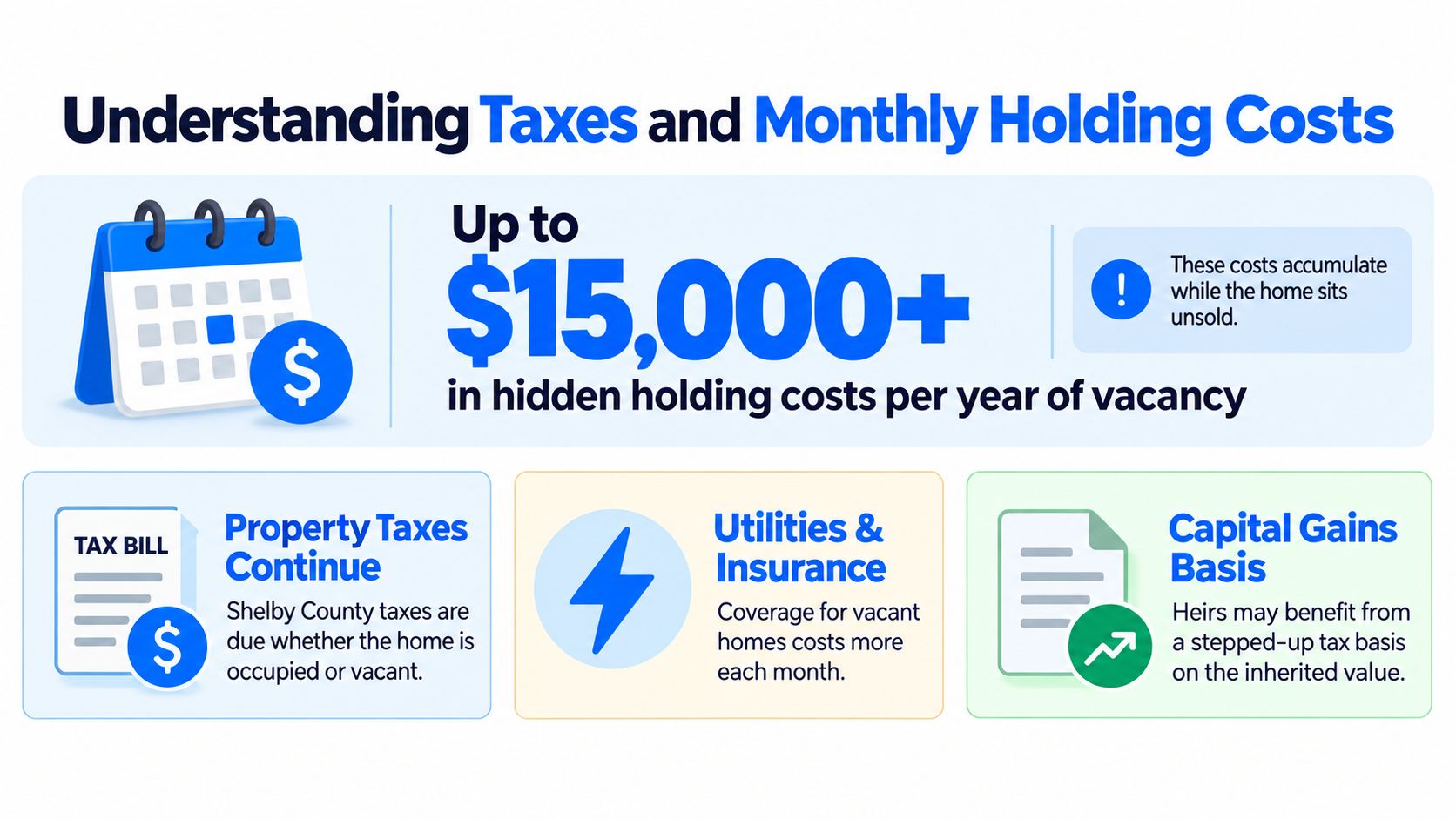
Tennessee doesn't impose a state inheritance tax on deaths after December 31, 2015, but heirs can still face property taxes, mortgage payments, insurance, utilities, maintenance, lien resolution, and closing expenses. The absence of an inheritance tax doesn't make a vacant property free to hold.
Tennessee property tax is calculated using the county assessor's appraised value, the assessment ratio for the property's class, and the local tax rate. Inheritance itself doesn't trigger the ordinary property-tax bill. For inheritance-tax purposes, Tennessee uses the property's value on the date of death, with an alternate valuation date six months later if the executor or administrator elects it. Tennessee's property-tax guidance explains the valuation framework.
Understand the stepped-up basis
Inherited property may receive a step-up in tax basis to its fair market value at the owner's death. That generally means the taxable capital gain is measured from the inherited value rather than the deceased owner's original purchase price, but the result depends on the estate, ownership structure, valuation, improvements, sale expenses, and applicable federal rules.
Example: assume a qualified valuation establishes that the Memphis home was worth $200,000 on the date of death, and the estate later sells it for $215,000. Before accounting for allowable selling expenses or other adjustments, the potential appreciation measured from that stepped-up basis is $15,000, not the entire increase from what the deceased originally paid decades earlier. A CPA must determine how that concept applies to your return.
Keep the date-of-death appraisal or valuation, repair and improvement records, invoices, probate expenses, and final closing statement. Ask a CPA or tax professional to review the sale when the property value, family ownership, trust structure, or potential tax exposure is significant.
Calculate the carrying cost honestly
While the estate waits, someone still pays for insurance, utilities, lawn care, security, repairs, mortgage obligations, and property taxes. Vacant homes can also develop problems that occupied homes reveal sooner, including leaks, pests, vandalism, and neglected maintenance.
Set up a simple monthly ledger. List every expense, identify who paid it, and decide whether the estate will reimburse that person. Then compare the total cost of waiting with the estimated difference between a faster as-is sale and a slower retail sale. The right answer isn't always the highest gross price. It's the strongest net estate result after time, risk, and expenses.
Get a cash offer for your home
Managing Multiple Heirs and Out-of-State Logistics
A sale becomes harder when one sibling wants the highest possible price, another wants a quick closing, and a third wants to keep the house. Add personal belongings, repair decisions, and different financial needs, and informal family conversations can quickly produce conflicting instructions.
Establish one communication channel and put decisions in writing. Before listing or accepting an offer, agree on:
-
Authority: Identify the executor, administrator, trustee, surviving owner, or co-owners who can approve the transaction.
-
Price: Use a market analysis or independent appraisal rather than a family memory of what the house was worth.
-
Repairs: Approve a budget, name the person responsible for contractors, and require receipts.
-
Belongings: Set a deadline for personal-property decisions and document what will be removed, donated, stored, or left for the buyer.
-
Proceeds: Confirm that the closing statement will pay valid expenses and debts before distribution under the will, trust, or probate rules.
If heirs disagree, don't let the dispute remain informal. An estate attorney or neutral mediator can help the family compare options before someone files a partition action or blocks access to the property. A written valuation often clarifies whether the disagreement concerns actual economics or different emotional priorities.
Handle remote ownership deliberately
An out-of-state heir can usually participate through coordinated electronic communication, approved signing procedures, and a local or mobile notary when the title company permits it. Ask the closing agent early whether each signer must appear in person, whether a power of attorney is acceptable, and what form the attorney-in-fact documents must take.
Never sign a power of attorney casually. The document should identify the transaction authority clearly, and the title company should approve it before closing. Use one contact person to coordinate the Memphis property, but don't give that person unchecked control over money or belongings.
For practical considerations involving co-owners, review selling inherited property with multiple owners. The family should still obtain Tennessee-specific advice before relying on any general process.
Moving Forward with Confidence and Clarity
Selling an inherited house in Memphis becomes manageable when you treat it as three connected tasks: establish authority, clear title, and choose a sale method that fits the estate. Secure the property, preserve insurance, gather the records, and send the complete file to a Shelby County probate attorney and a reputable title company.
Don't confuse a quick offer with a clean transaction. The estate still has to address mortgages, taxes, liens, heirship, disclosures, and the distribution of proceeds. Likewise, don't assume a traditional listing is automatically better if repairs, vacancy, family conflict, and delay consume the expected price advantage.
Use qualified local professionals for legal and tax decisions, especially when the property is held in a trust, several heirs own it, an heir is missing, or the title history is complicated. Confirm estate authority, title requirements, and tax questions before signing a contract.
Frequently asked questions
Can I sell an inherited house before probate is complete?
Sometimes the property can be marketed or a contract can be coordinated during probate, but the sale can't close unless the signer has authority to convey the property and the title company can insure the transfer. The answer depends on the estate structure, court documents, local law, and whether the home passed through a trust or survivorship arrangement.
Do all heirs have to agree to sell?
If several heirs own the property together, the required owners generally need to sign or otherwise participate in the transfer. An executor or administrator may have authority to sell estate property before distribution, subject to the will, court requirements, creditor issues, and applicable law. If cooperation fails, consult an estate attorney before considering litigation.
Can an executor sell an inherited house?
A court-appointed executor may be able to sell the house for the estate, but being named in a will isn't enough by itself. The executor needs the appointment and supporting documents required by the probate court and title company. The executor must also handle the sale in the estate's interests.
Can I sell an inherited house as-is?
Yes, an inherited house can often be sold as-is through an MLS listing or direct cash transaction. As-is describes the property's condition and the repair expectations. It doesn't eliminate the need to establish ownership, clear liens, provide required disclosures, or satisfy title underwriting.
What happens if the inherited home has a mortgage?
The mortgage remains a debt secured by the property. Contact the lender, keep the account from falling into default, and request a payoff statement. At closing, the mortgage is generally addressed from the sale proceeds, subject to the lender's instructions and the estate's legal circumstances.
Do I have to pay taxes when I sell inherited property?
You may have tax reporting obligations even when Tennessee doesn't impose a state inheritance tax for the applicable death date. Capital gains, federal estate matters, property taxes, liens, selling expenses, and basis adjustments depend on the facts. Keep the date-of-death valuation and ask a CPA to review the transaction.
What documents are needed to sell an inherited house?
Expect to provide a death certificate, will or trust, court appointment papers if applicable, deed, tax records, mortgage payoff information, insurance records, HOA documents, repair records, lien information, and government-issued identification. The title company will provide the property-specific checklist.
Can an out-of-state heir sell a property remotely?
Often, yes. Remote coordination may involve electronic documents, a mobile notary, approved power-of-attorney paperwork, and a closing company that can accommodate the signer. Ask the title company about its requirements before accepting an offer.
How long does it take to sell a probate property?
There isn't a universal timeline. A clear estate with cooperative heirs and clean title can move differently from an estate with missing documents, disputes, liens, or unclear heirship. The sale method affects the marketing period, but court authority and title clearance often control the closing date.
Should I use an agent or accept a cash offer?
Use an agent when the home is in marketable condition and the estate can manage preparation, showings, negotiations, and buyer contingencies. Consider an as-is listing or cash offer when repairs, vacancy, clutter, distance, or certainty matter more than maximizing the gross price. Compare written net proceeds, not just the headline offer.
Cyber Homes offers a no-obligation way to evaluate an inherited Memphis property as-is, coordinate with the closing process, and choose a preferred closing date. If your family wants to compare that route with an agent listing, visit Cyber Homes and request an offer before making a decision.

Edited by
James Vasquez
Real Estate Investor & Land Specialist with 10+ years experience in residential flipping, vacant land investing, land wholesaling, and subdivision deals.
Disclaimer: The information provided is for educational purposes and does not constitute financial or legal advice. Always consult with licensed professionals before making investment decisions.