
Renting a House That Is for Sale: Risks, Benefits, & Tips

A lot of people end up in this spot by accident.
The owner has a house listed, the mortgage and utilities are still due, and the property is sitting empty. Or the renter finds a house in the right neighborhood, with the right layout, and then notices the sign in the yard. Both sides see an opportunity. Both sides also see risk.
That tension is real, but it doesn't make the arrangement a bad idea. It just means renting a house that is for sale has to be handled more carefully than a normal rental or a normal listing. The seller wants income, flexibility, and a clean sale. The tenant wants stability, privacy, and clear rules. If either side treats it casually, the deal usually gets messy fast.
An Unusual Situation for Sellers and Renters
This setup usually starts with a practical problem, not a strategy. A seller doesn't want a vacant property draining cash while waiting for a buyer. A renter needs a place now and is willing to accept some uncertainty in exchange for location, timing, or lease flexibility.
That's not a fringe situation. The rental market is huge. 44.1 million American households are renters, and a 2024 Harvard study found 22.4 million households spend more than 30% of their income on rent according to The Zebra's renting statistics summary. That matters because flexible housing arrangements aren't rare workarounds. For many households, they're part of how people bridge life transitions.
Why both parties say yes
For sellers, the appeal is straightforward. Rent can help offset carrying costs while the property is still on the market. A lived-in house can also stay in better day-to-day condition than an empty one, assuming the tenant is reliable and the lease is written well.
For tenants, the attraction is different. A listed home may offer a shorter commitment, access to a single-family property, or a chance to live in a neighborhood where standard rentals are limited. In some cases, the owner may also be more flexible on lease structure because the sale is still the main goal.
Where deals usually go wrong
Most problems show up because one side assumes the other understands the unwritten rules.
- Owners assume access is automatic. It isn't. Showings, inspections, photos, and repairs should all be addressed in writing.
- Tenants assume a sale ends the lease immediately. That's not automatically true. The lease and local law matter.
- Agents assume cooperation will happen naturally. It usually won't unless expectations, notice, and scheduling are handled carefully.
- Everyone underestimates timing friction. A house can be rentable and sellable, but combining the two creates more moving parts.
Renting a listed home can work well, but only when both parties treat it like a negotiated business arrangement, not a casual favor.
The smart approach is simple. Define who gets access, when they get access, how much notice is required, who handles repairs, what happens if the house sells, and how the move-out process will work. If those points are vague, the arrangement becomes stressful for everyone involved.
The Double-Edged Sword of Renting a Home for Sale
A listed home with a tenant isn't unusual. It's part of a larger, established market. The National Association of Realtors reports that the share of single-family homes being rented has stabilized around 15.8% since 2023, and over the past decade the country added about 10.7 million single-family homes while the number of single-family rentals declined from 15.2 million to 14.4 million, leaving roughly one in six single-family homes as rentals in NAR's single-family rental trends analysis. So this arrangement isn't some odd loophole. It sits inside a normal part of the housing market.
Still, “normal” doesn't mean easy.

What owners gain and what they give up
The upside for the owner is obvious. Rent can reduce the pain of holding the property while waiting for a buyer. A tenant may also keep the property active and maintained in a way a vacant house often isn't.
The cost is control. Every showing now has to work around a real person's life. Open-house flexibility shrinks. Last-minute buyer requests become harder. If the tenant is uncooperative, the property can feel harder to access and less attractive to owner-occupant buyers.
What tenants gain and what they give up
The tenant may get a house that would otherwise never hit the rental market. Shorter terms can help someone between moves, during a relocation, or while waiting to buy. In some cases, the tenant may even prefer the temporary nature of the deal.
The trade-off is instability. Showings interrupt normal life. Privacy feels thinner. The home can sell while the tenant is still living there, which means the tenant needs to know exactly what rights survive the sale and what obligations still apply.
Landlord vs Tenant pros and cons of renting a listed home
| Party | Pros | Cons |
|---|---|---|
| Owner | Rental income can offset carrying costs. A tenant may help keep the property occupied and cared for. | Showing access is more limited. Closing timelines can get harder if move-out terms are unclear. |
| Tenant | Shorter lease structures may fit temporary housing needs. The home may be available in a neighborhood with limited rentals. | Frequent showings can disrupt routines. A future sale can create uncertainty about occupancy. |
Decision rule: If the owner values maximum showing access and sale speed, a tenant can become a drag on the process. If the renter values privacy and long-term certainty, a listed home may be the wrong fit.
For some owners, the better answer isn't managing this balancing act at all. If speed and certainty matter more than squeezing out interim rent, it's worth reviewing alternatives to the MLS process, including options for selling your house fast.
Drafting a Lease That Protects Everyone
If the lease is weak, everything else gets harder. Most problems stem from this. Owners focus on getting rent in place. Tenants focus on move-in. Then the first showing request, repair issue, or accepted offer exposes all the missing terms.
A strong lease for a home that's also listed for sale needs more than standard rent and deposit language. It needs sale-specific rules. If you want a plain-English refresher on the basics before adding those extra protections, this guide on what is a lease agreement is a useful starting point.

The clause that matters most
The most important paragraph in the entire document is the sale of property clause.
The lease should say what happens if the property sells, whether the lease continues, whether either side can terminate early, how much notice applies, and who handles the security deposit after closing.
Without that clause, both sides start making assumptions. That's where disputes come from.
A seller may assume the buyer can demand vacancy. A tenant may assume the lease survives unchanged. Sometimes one of those outcomes is correct. Sometimes neither is. The lease needs to answer the question before the listing generates serious buyer interest.
What needs to be written down
Use the lease to remove ambiguity. At minimum, cover these points:
- Showing access. State the notice required before entry, the time windows allowed, whether weekends are included, and whether the tenant can be present.
- Photography and marketing. Decide whether listing photos or video can include the tenant's belongings and whether certain rooms are off-limits for marketing.
- Staging rules. If furniture will be moved, décor added, or personal items hidden, the lease should describe what's allowed and who returns the property to normal condition.
- Repairs and maintenance. Separate normal habitability issues from sale-prep items. A leaking pipe is not the same as a cosmetic touch-up for listing photos.
- Security deposit transfer. The agreement should say what happens to the deposit if a buyer takes over as landlord.
- Early termination options. Some leases let the owner terminate after sale with written notice. Others give the tenant an exit right if showings become too disruptive.
The tenant's legal rights matter here too. A sale doesn't erase them. ThinkGlink notes that notice before entry and quiet enjoyment vary significantly by jurisdiction, and that tenants may be able to negotiate limits, compensation, or written schedules because those rights are defined by local law, not by the fact that the property is being sold, as explained in this tenant-rights discussion.
Use operational details, not vague promises
A lease should read like instructions, not aspirations.
Instead of saying “tenant agrees to cooperate with showings,” say how that works in practice. Spell out the communication method, expected response times, blackout periods, lockbox rules, and whether the owner or listing agent must accompany visitors. The more specific the language, the fewer fights later.
This walkthrough may also help if you want a visual explanation of lease terms and sale-related logistics:
A practical lease checklist
| Lease issue | Why it matters |
|---|---|
| Sale clause | Prevents confusion when an offer is accepted |
| Notice for entry | Protects tenant rights and owner access |
| Showing hours | Reduces scheduling conflict |
| Repair responsibility | Separates urgent fixes from sale prep |
| Deposit handling | Avoids disputes at closing or transfer |
If an owner wants maximum flexibility, the lease should say so plainly. If a tenant wants compensation, reduced rent, or hard limits on access, that also belongs in writing. Verbal side deals are where trust breaks down.
Managing Showings and Maintenance During the Sale
Once the tenant moves in, the test begins. This is the part that either keeps the sale on track or kills momentum. Buyers don't see the back-and-forth texts, the missed showing windows, or the repair delays. They just feel friction.
Innago's guidance is practical on this point. Sellers should inform tenants early, complete a pre-listing inspection, make repairs before marketing, and coordinate showings around tenant schedules because tenant cooperation affects buyer interest and days on market, as discussed in Innago's guide to preparing a rental property to sell.

Showings work best when they feel predictable
Owners and agents make a mistake when they treat every showing as urgent. Tenants usually cooperate more when the schedule feels controlled.
Use a simple operating system:
- Pick one communication channel. Email, text, or a property app. Don't use all three.
- Create showing windows. For example, weekday evenings and limited weekend blocks.
- Set blackout times. Work calls, school pickups, religious observance, and medical needs should be respected.
- Confirm entry responsibility. State who opens the home, who attends, and whether a lockbox is permitted.
A tenant who knows the rules in advance is far more likely to cooperate than one who feels ambushed.
For owners considering low-contact access methods, this overview of implementing successful self-tours gives useful ideas on scheduling and access control. Even if you don't use self-guided tours, the core lesson applies. Access has to be standardized.
Maintenance needs triage, not guesswork
Repairs during a sale can create confusion because some issues affect livability and some only affect presentation. Don't lump them together.
A practical way to sort them:
Urgent habitability items
Water intrusion, broken heat or cooling, electrical hazards, plumbing failures, or anything that affects safe occupancy should be handled first.Buyer-facing functional issues
A sticking exterior door, missing handrail, or broken appliance can surface in inspections and should be addressed quickly if the owner wants fewer objections.Cosmetic sale-prep items
Paint touchups, minor trim defects, and décor-related changes should be scheduled so they don't disrupt the tenant unnecessarily.
Keep records like a file, not a conversation
Every repair request and showing request should be documented. That protects the tenant if access becomes excessive, and it protects the owner if the tenant later claims unreasonable intrusion or neglected maintenance.
Use photos at move-in, written repair logs, and simple summaries after major appointments. If the buyer later asks about condition or occupancy, the owner won't be relying on memory.
Rocket Mortgage also recommends setting rent by reviewing neighborhood comps and accounting for carrying costs, while making sure the lease clearly defines showing access, maintenance, deposit terms, and lease length in its guide on how to rent a house. That's practical advice because sale flexibility usually comes down to what was documented before problems started.
The Final Act Navigating the Sale and Move-Out
When the seller accepts an offer, the tenant's next question is usually simple. Do I have to move?
The answer depends on the lease, the buyer's plan, and local law. The sale itself doesn't automatically wipe out tenancy terms. That's why this stage goes more smoothly when the parties already know which path applies.
Scenario one with a buyer who wants the house vacant
This is common when the buyer plans to live in the property. The lease may allow termination after sale with written notice. If it does, the owner should follow that clause exactly and give the tenant the required notice in writing.
The tenant should respond just as formally. Confirm the move-out date, ask how the final walkthrough will be handled, and request written instructions on keys, cleaning standards, and the security deposit process. If local rules are unclear, jurisdiction-specific guidance matters. For example, The Law Office of Bryan Fagan explains how this issue can play out under Texas tenant law.
Scenario two with a buyer who becomes the new landlord
If an investor buys the property, the existing lease may continue. In that case, the tenant usually needs a clean transition, not a move-out plan.
That means the seller should transfer lease documents, payment records, and the security deposit according to the applicable agreement and law. The buyer should immediately notify the tenant where rent goes, how maintenance requests should be submitted, and who has authority to enter the property going forward.
The cleanest transfer is boring. New owner identified, lease acknowledged, deposit addressed, and tenant given one clear point of contact.
Final-week checklist for both sides
| Party | Priority before closing |
|---|---|
| Seller | Confirm buyer intent, deliver written notices, document deposit handling |
| Tenant | Save all notices, confirm move-out or continuation terms, document unit condition |
| Buyer | State occupancy plan clearly, provide new contact and payment instructions |
For sellers who don't want to manage lease transfers, tenant coordination, and closing uncertainty, there's a more direct route than a traditional listing. A company that buys homes for cash can remove the occupancy-and-marketing balancing act entirely.
Exploring Simpler Alternatives to This Arrangement
After you've seen how many moving parts this setup creates, the obvious question is whether there's a cleaner option. Often there is.
Some owners try a month-to-month lease. That gives the seller more flexibility, but the tenant gets less stability. Others leave the property vacant and absorb the carrying costs in exchange for easier showings, staging, inspections, and faster possession. A few explore rent-to-own, but that adds another layer of negotiation and usually isn't ideal when the owner wants a straightforward exit.
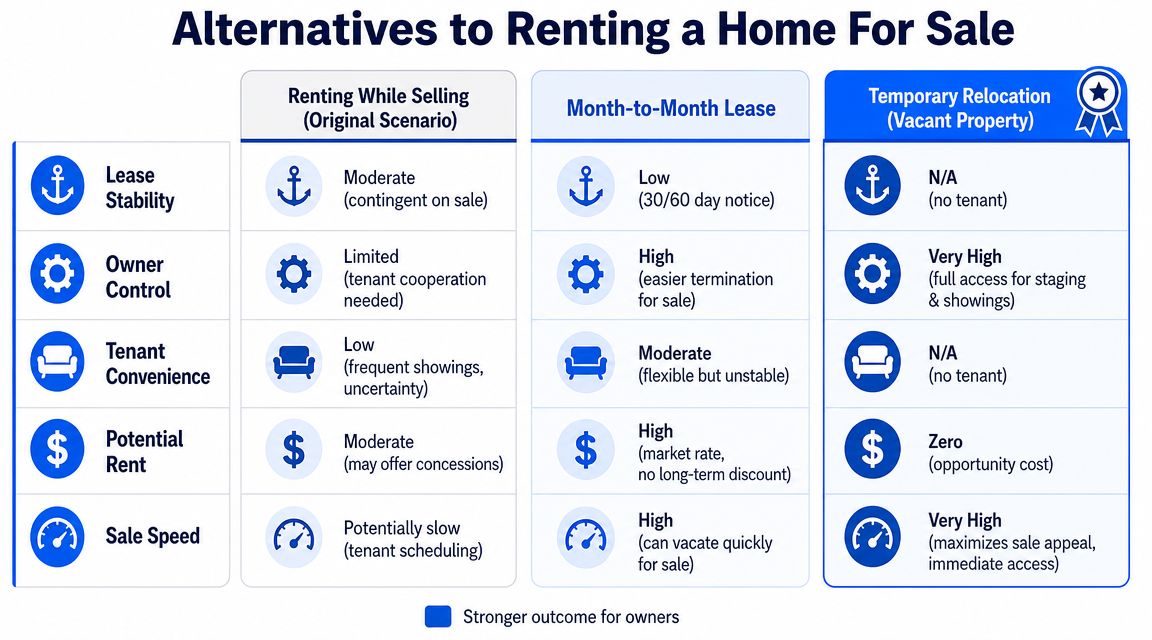
Why simplicity often wins
The hardest part of renting a listed house isn't finding a tenant. It's managing the conflict between occupancy and sale readiness. One side wants normal use of the home. The other wants access, flexibility, and a buyer-friendly presentation.
That's why owners often underestimate the trade-off between renting and selling vacant. As noted in the verified guidance tied to this market discussion, a cash sale to an investor bypasses that calculation by providing a certain closing date and price while eliminating carrying costs, tenant management headaches, and the market risk of a prolonged listing period. For owners facing relocation, probate, divorce, inherited property issues, or a problem rental, that kind of certainty can matter more than temporary rent.
When a direct sale makes more sense
A direct sale tends to be the cleaner move when:
- Time matters. The owner can't wait through listing, tenant coordination, and buyer contingencies.
- The house needs work. Repairs for tenants and repairs for retail buyers can stack up fast.
- Occupancy is already a problem. An uncooperative tenant can reduce showing quality and buyer confidence.
- The owner wants fewer moving parts. No leasing, no turnover, no showing calendar, no negotiation over access.
If the property condition or timeline makes the open market feel like the wrong fit, selling a house as-is can be a much more practical solution than trying to create a temporary rental while also chasing a sale.
If you'd rather avoid lease clauses, showing conflicts, repair coordination, and the uncertainty that comes with renting a listed property, Cyber Homes offers a simpler path. The company buys houses for cash across the U.S., purchases properties as-is, and lets sellers skip repairs, showings, and commissions. For owners dealing with an inherited house, a difficult rental, relocation, divorce, probate, or a property that just needs to sell quickly, Cyber Homes can provide a firm offer and a closing timeline that works around your situation.