How We Buy Houses for Cash in Cleveland, OH
 Edited byJames Vasquez
You're staring at a Cleveland house that needs more attention than you can give it. Maybe the mortgage is behind, a tenant has stopped paying, an inherited property in Collinwood is vacant, or a sheriff's sale is getting closer while you're trying to work, move, or manage a family crisis. A traditional listing may still work, but it demands time, repairs, access, and patience.
Cyber Homes buys houses for cash in Cleveland, OH from homeowners who need a practical exit. The process is straightforward: share the property details, allow a walkthrough or evaluation, review a written offer, and close through a reputable title company on an agreed schedule. You can sell the house as-is, without preparing it for showings or waiting for a mortgage lender to approve the buyer.
Why Cleveland Homeowners Consider a Cash Sale
A Cleveland homeowner may reach the cash-sale decision after months of avoiding the same problem. The roof still leaks, the property taxes remain unpaid, or a relative's house in Old Brooklyn needs to be emptied and maintained. Then a relocation, divorce filing, or foreclosure notice turns a slow-moving problem into a deadline.
Common situations include:
- Inherited homes: Heirs may not want to repair, clean, insure, and maintain a property they didn't choose to own. Probate paperwork and family decisions can make a conventional sale even harder.
- Job relocation: A new role outside Northeast Ohio can create a firm moving date while the Cleveland mortgage, utilities, and upkeep continue.
- Divorce: A sale may need to happen while both owners are dealing with legal, financial, and emotional pressure.
- Tax or mortgage delinquency: A Cuyahoga County sheriff's sale creates a deadline that doesn't care whether the home is ready for the MLS.
- Unfunded repairs: Foundation movement, old mechanical systems, water damage, or severe clutter can make listing preparation impossible.
Traditional listings often break down because the property and the buyer's financing don't match. FHA buyers may require repairs before closing. An appraisal can create a gap when the home's condition doesn't support the contract price. A financed sale also takes longer than a direct cash transaction, which is a poor fit for a relocation or foreclosure timeline.
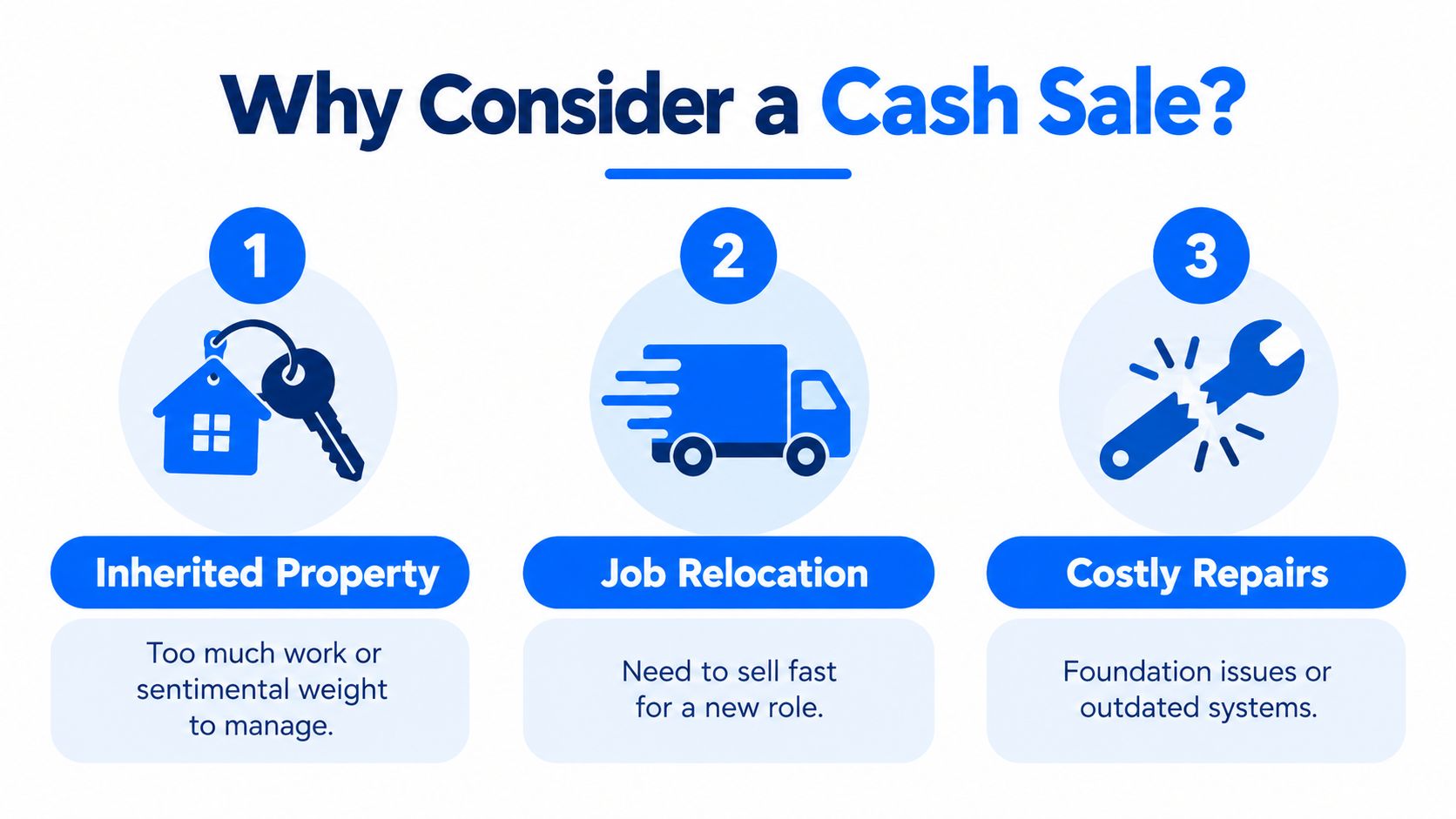
Practical rule: Choose a cash sale when certainty, condition, or timing matters more than testing the market for the highest possible price.
That trade-off is real. A cash buyer usually offers less than a fully renovated home might bring through a competitive listing, but you may avoid repairs, showings, financing contingencies, and months of carrying costs. Start by identifying the deadline you can't miss, the work you can't fund, and the amount needed to resolve the mortgage or tax balance. Those facts determine whether speed has meaningful value in your situation.
The Cleveland Cash Market in Real Numbers
Cleveland homeowners are selling into a market where cash purchases are common. Local reporting tied to Redfin data found that 40% of Cleveland-area homes were purchased with cash in 2024, compared with 48% in 2023, while a broader analysis reported that 48.8% of metro-area acquisitions from January 2011 through February 2024 were cash purchases, versus a 34.5% national average (Axios' Cleveland housing report).
That makes a cash offer part of Cleveland's normal sales activity, not an unusual workaround. From the buyer's side, skipping mortgage underwriting removes a major delay. It also makes the timeline easier to control when the property needs work or the seller has a deadline tied to relocation, probate, payoff, or foreclosure.
Cleveland's pricing and pace give sellers another reason to compare a direct offer with a traditional listing. Realtor.com reports a $150,000 median listing price, 51 median days on market, and roughly 2.1K properties for sale in Cleveland (Realtor.com's Cleveland market page). Older housing stock often brings repair and inspection questions, so an as-is offer can be easier to evaluate than a renovation plan with an uncertain finish date.
Cleveland Sale Comparison
| Metric | Cash Sale | Financed Sale |
|---|---|---|
| Buyer funding | Buyer uses cash or private funds, so mortgage underwriting isn't required | Buyer depends on lender approval |
| Property condition | Often purchased as-is, with no seller repair program | Repairs may be requested after inspection or appraisal |
| Closing pace | Clean-title transactions can close in 7 to 14 days (Ohio title guidance) | The lender adds underwriting, appraisal, and approval steps |
| Main risk | Title, payoff, lien, or probate problems can still delay closing | Financing, appraisal, inspection, and buyer approval can affect the contract |
| Best fit | Urgent deadlines, major repairs, vacancy, probate, or foreclosure pressure | Sellers who can wait and prepare for a broader buyer pool |
The speed comes after the offer is signed, not before. The title company still checks ownership, orders payoff figures, reviews liens, and confirms whether probate or foreclosure paperwork affects the transfer. A cash buyer can set a closing date quickly, but cannot responsibly promise a clean closing until those items are resolved.
Judge the offer by its net proceeds and certainty. “Cash” does not erase unpaid taxes, mortgage balances, liens, or title defects. It only removes the lender from the buyer's side of the transaction.
What Kinds of Homes We Buy in Cleveland
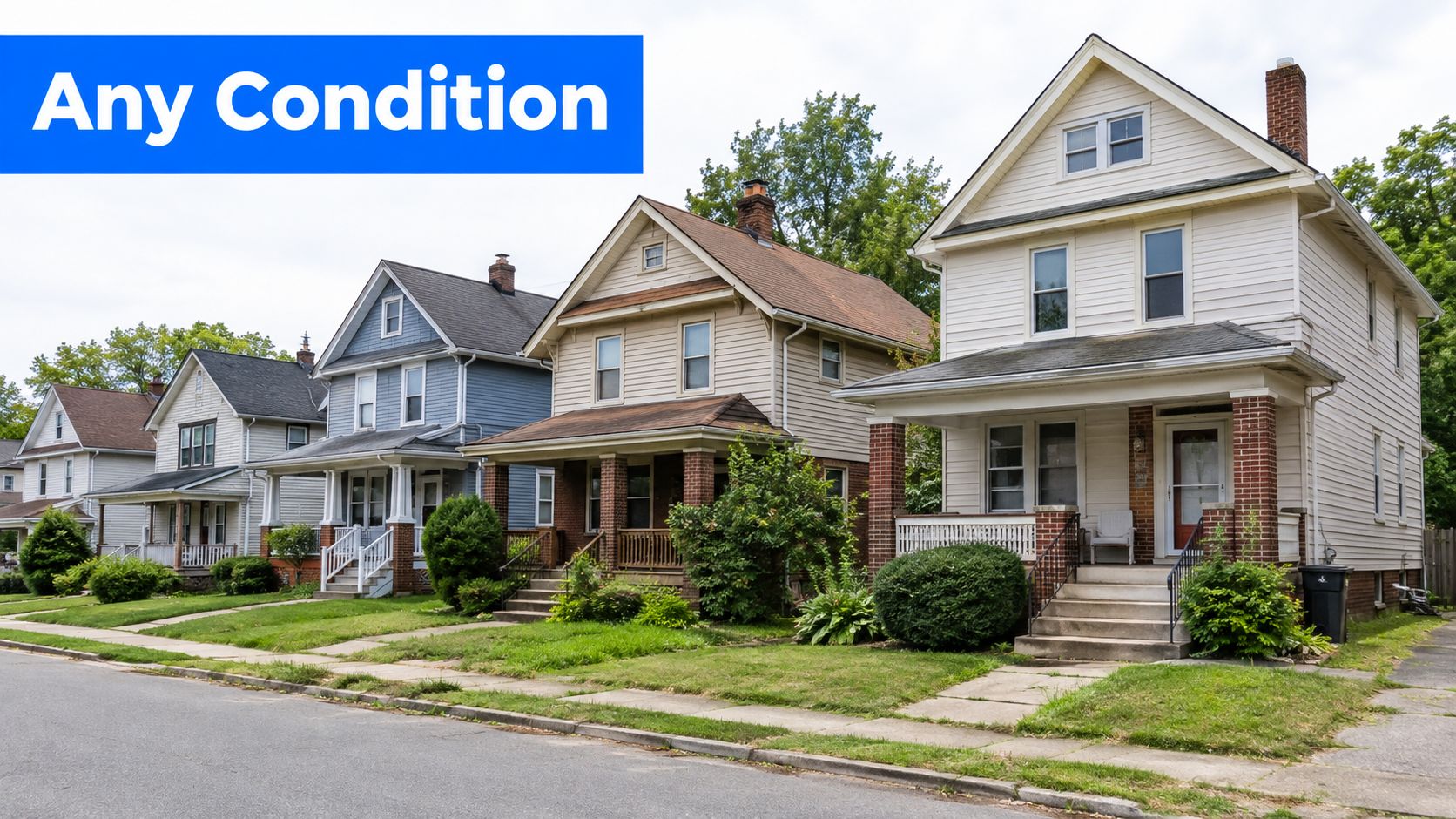
Cyber Homes evaluates houses in any condition, including properties that need repairs before a conventional buyer could move in. That can include a single-family bungalow in Detroit-Shoreway, a double in Slavic Village, or a two-family Colonial on Cleveland's east side. It can also include a vacant probate property, a rental with deferred maintenance, or a home carrying code-violation notices.
The property type matters, but the seller's situation matters just as much. A tenant-occupied house may require a different closing plan than a vacant one. An inherited property may need authority from an executor or multiple heirs. A house with unpaid taxes, a mortgage, or a second lien needs payoff coordination before anyone can promise a clean transfer.
What We Check During Evaluation
We don't need a home to look ready for a magazine. We do need enough information to understand the project and the legal path.
- Structure: Foundation movement, sagging floors, water intrusion, and major settlement affect the feasibility of the purchase.
- Roof and mechanicals: The roof, furnace, electrical service, plumbing, and air-conditioning equipment help determine the repair scope.
- Interior condition: Fire damage, severe clutter, mold concerns, outdated finishes, and missing fixtures all change the work required.
- Title status: Ownership, mortgages, tax balances, judgments, probate authority, and other liens must be resolved.
- Occupancy: A vacant home is handled differently from a property with tenants, family members, or unauthorized occupants.
- Use and zoning: Duplexes, multifamily homes, additions, and unusual lots need to match the property's legal use and records.
A small lot or an older construction date doesn't automatically eliminate a property. Neither does a code violation. The deciding question is whether the house, title, and numbers support a responsible purchase.
If the property has suffered from a fire, review the practical considerations for a fire-damaged house sale before assuming you must complete every repair. The right next step is usually an honest evaluation, not a rushed cleanup.
How the Offer and Walkthrough Actually Work
The first contact can be a phone call or an online form. Give the address, your ownership status, the condition you know about, the occupancy situation, and the date by which you need to sell. A useful opening script is simple: “I own this Cleveland property, it needs these repairs, and I need to close by this date. What information do you need to make a written cash offer?”
Cyber Homes then arranges a property walkthrough or another evaluation. An interior visit often takes 15 to 30 minutes, depending on access and condition. The buyer looks at the roof, foundation, mechanical systems, water damage, layout, occupancy, and visible safety or code concerns. You don't need to hide defects. Missing information creates renegotiation later, while accurate information produces a more reliable offer.
How the Number Is Built
A cash offer reflects what the buyer expects to spend and risk after closing. The calculation usually considers:
- Comparable sales: Recent sales in the same Cleveland ZIP code help establish the likely finished value.
- Repairs: The buyer estimates materials, labor, permits, cleanup, and unknown conditions.
- Holding costs: Insurance, utilities, taxes, financing, and time affect the project.
- Resale margin: The buyer needs room for risk and a potential resale after the work is complete.
- Title and occupancy complications: Liens, probate, tenants, and delays can change the transaction cost.
That's why an off-market offer can be below the price of a renovated home listed publicly. You're comparing a direct, as-is transfer with a market sale that may require preparation, showings, inspection responses, and lender approval.
Compare the Written Terms
Never compare offers by price alone. Put the terms next to each other.
| Offer Element | Offer A | Offer B |
|---|---|---|
| Purchase price | ||
| Closing date | ||
| Inspection or cancellation rights | ||
| Financing contingency | ||
| Earnest money terms | ||
| Closing-cost responsibility | ||
| Included items and personal property | ||
| Move-out or possession date |
Gather your mortgage payoff information before the walkthrough if possible. Locate tax notices, lien letters, code violations, probate documents, and lease information. Decide which rooms the buyer can inspect, but don't restrict access to the areas most likely to affect the offer. A firm written price with a clear closing date is more useful than a verbal promise to “pay cash.”
What Happens Between Offer and Closing
You signed the agreement, but the sale is not finished. In Cleveland, the title company or closing attorney now checks whether you can transfer the property and what must be paid before you receive proceeds. The title search reviews Cuyahoga County records for ownership, mortgages, judgments, unpaid taxes, liens, probate matters, and other claims. Ohio cash-sale guidance identifies title review and payoff work as early steps, with payoff statements and title work taking several business days (Ohio cash-closing guidance).
The Cleveland Closing Path
Here is what happens after the offer is signed:
- Agreement signed: The contract fixes the price, closing date, possession terms, and each party's responsibilities.
- Payoff ordered: The title company requests a current mortgage payoff and checks for other liens, tax balances, or judgments.
- Title reviewed: The title agent addresses defects and gathers releases, affidavits, probate documents, or foreclosure-related paperwork.
- Final condition confirmed: The buyer verifies that the home remains in the agreed condition and that occupants and belongings will be handled as promised.
- Closing scheduled: The title company provides signing instructions, the final settlement statement, and wire-fraud warnings.
- Documents signed: You transfer ownership and approve the distribution of sale proceeds.
- Funds and keys exchanged: Once the closing company confirms the transaction, funds transfer and possession changes according to the contract.
Cuyahoga County tax-foreclosure properties may require specific affidavits before transfer. Missing one can delay the title transfer. Title and payoff work must begin before anyone promises an exact closing date.
A vacant property with clear title may close in about 7 to 14 days once title is clear. The signed-agreement-to-closing window can run 10 to 21 days when title issues, payoff delays, or missing documents require more work.
The title agent should tell you when the search starts, when a lien or payoff problem appears, and when signing is ready. On closing day, verify wire instructions by calling the title company at a trusted number. Do not rely on a last-minute email. Review the settlement statement for the purchase price, mortgage payoff, taxes, other deductions, and the amount you will receive.
Put any moving-cost arrangement in writing. Cyber Homes may advance up to $2,000 for moving expenses before closing, but the contract and closing company must confirm the arrangement.
What a Cash Sale Does and Does Not Get You
A cash sale solves specific problems. It doesn't turn a distressed property into a retail-priced asset, and it doesn't remove title requirements. The right comparison is the money you keep, the work you avoid, and the deadline you meet.
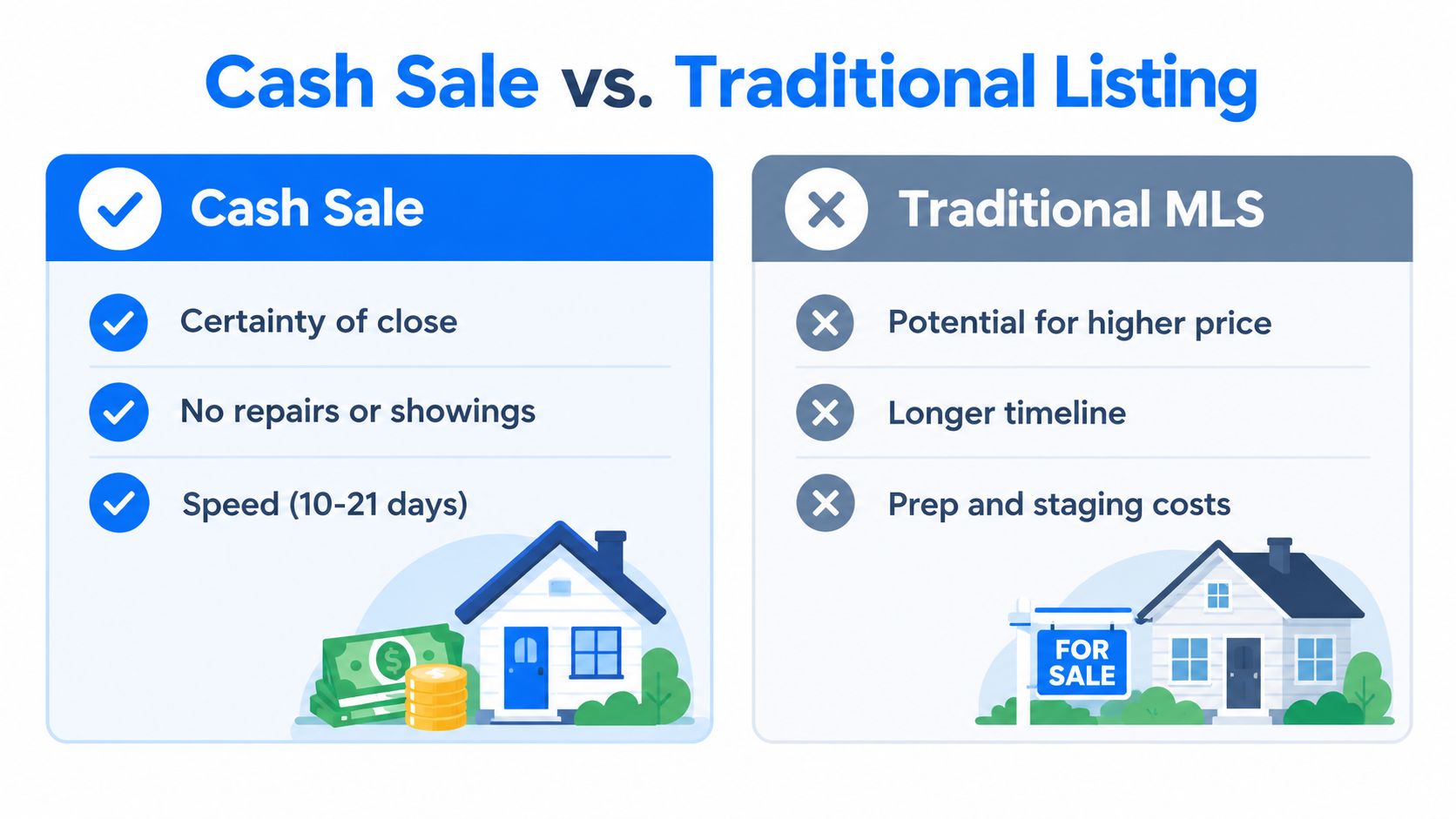
What You Gain
- Certainty: A buyer who has verified funds doesn't depend on mortgage underwriting.
- Less preparation: You can avoid repairs, staging, repeated showings, and inspection negotiations.
- Flexible possession: The contract can set a move-out date that fits your circumstances.
- Deadline control: A direct sale can help address foreclosure, probate, relocation, or vacancy pressure before the property becomes harder to manage.
- Privacy: You may avoid publicly advertising the home and inviting strangers through the property.
What You Give Up
- Potential retail value: A cash offer is commonly below the amount a renovated property could attract through a competitive MLS listing.
- Buyer competition: You may receive one offer instead of multiple buyers bidding against one another.
- Market testing: You won't know whether a longer listing campaign would have produced a higher contract price.
- Negotiation range: Some direct buyers use firm underwriting models, so the offer may have limited flexibility.
The trade-off often makes sense for a tired landlord, an heir, a relocating owner, or someone facing a short foreclosure window. It may not make sense if the property is in good condition, you can wait, and maximizing net proceeds is your priority. A Cleveland owner dealing with bankruptcy should also get legal advice before selling. For questions about whether you can keep your home in Chapter 7, speak directly with a qualified bankruptcy attorney rather than relying on a buyer's opinion.
Review an as-is home buyer option alongside an agent's pricing analysis. The useful question isn't “Which method sounds better?” It's “Which method leaves me in the stronger position after repairs, carrying costs, commissions, delays, and my deadline?”
How to Verify a Cash Buyer Before You Sign
A legitimate cash buyer should make verification straightforward. If a company asks for your signature before showing proof of funds, identifying the closing company, or explaining the agreement, pause the deal. You need clear answers before giving up control of the transaction.
Confirm the Money
Ask for proof of funds tied to your purchase. Acceptable documentation can include:
- Bank evidence: A recent statement or bank letter showing available funds, with sensitive account details reasonably redacted.
- Wire confirmation: Documentation from the buyer's financial institution that can be independently verified.
- Private-money letter: A letter from a hard-money lender naming the property address and explaining the funding commitment.
A confident phone call is not proof. Ask who will fund the purchase, whether the buyer is buying directly or assigning the contract, and whether another approval is still required before closing. A reputable buyer should answer these questions without pressuring you.
Check the Business and Closing Team
Search the buyer's Ohio LLC through the Ohio Secretary of State business search. Confirm that the entity is registered and active. Then review Cuyahoga County Fiscal Officer property records to see whether the company or its principals have an identifiable local ownership history. These records do not guarantee a good transaction, but they can show whether the buyer is established and possible to verify.
Request the title commitment or the escrow officer's contact information. Call the title company independently, confirm the property address, and ask whether the closing file exists. You should know where documents will be signed, who will hold the funds, and which company will handle payoff and title issues.
Before handing over keys: Confirm that the closing attorney or title agent is licensed in Ohio. Make sure the contract states when possession changes.
Read for Assignment and Money Traps
The purchase agreement determines your risk. Review the buyer's inspection and cancellation rights, assignment language, earnest money, closing-cost obligations, possession date, and every fee deducted from your proceeds.
Never wire earnest money directly to the buyer. Never send money because an email claims that the title company changed its wiring instructions. Call the closing office through a phone number you found independently, rather than relying only on the number included in the message.
Pay close attention if the buyer:
- Avoids written terms: A verbal promise does not establish a closing plan.
- Uses unexplained urgency: A real deadline calls for quick action, not intimidation.
- Refuses property access: A buyer who will not inspect may intend to renegotiate or assign the agreement.
- Won't identify the closing company: Title and escrow details should be available before signing.
- Requires direct payments: Earnest money and fees should pass through documented escrow procedures.
- Offers a changing price: A low initial offer followed by repeated reductions is not a firm cash solution.
- Requests personal information too early: Share only what the title company and transaction require.
Search the company name with terms such as “complaint,” “BBB,” and “lawsuit.” Read Google reviews and Better Business Bureau information critically. Look for repeated complaint patterns rather than relying on a polished testimonial page. You can compare the buyer with other options in this Cleveland cash-buyer company guide, then independently verify every company before signing.
Know When Speed Is Worth the Discount
A cash sale makes the most sense when your deadline is concrete. In Cleveland, that may involve a foreclosure filing with a sheriff's sale approaching, an inherited property requiring probate action, a relocation with a mortgage still running, or a house affected by serious disrepair, code violations, or tax delinquency.
Ohio is a judicial foreclosure state. Cleveland-focused guidance commonly places the process around 5 to 7 months from filing to sheriff sale, while another Cuyahoga County summary gives a broader 6-to-12-month range (Cleveland foreclosure timeline guidance). County court materials state a standard of disposing of 100% of foreclosure cases within 12 months from judge assignment (Cuyahoga County foreclosure court materials). Case timelines vary, so contact a foreclosure attorney and the court before relying on a buyer's estimate.
Cleveland also has vacant or partly abandoned properties. A foreclosure-data report cited zombie-foreclosure rates of 9.5% and 9.9% in Q1 2026 reports, with ZIP code 44108 cited at 41.1% (Cleveland foreclosure and zombie-property reporting). If your property is unsecured, protect it while deciding. Theft, weather damage, code enforcement action, and unauthorized occupancy can make the situation more expensive and harder to resolve.
Cyber Homes can evaluate a Cleveland house as-is, explain the offer, coordinate with a title company, and close according to the timeline written in the agreement. Visit Cyber Homes to submit the property details, request a cash evaluation, and discuss payoff, title, occupancy, or foreclosure issues before signing.
Edited by
James Vasquez
Real Estate Investor & Land Specialist with 10+ years experience in residential flipping, vacant land investing, land wholesaling, and subdivision deals.
Disclaimer: The information provided is for educational purposes and does not constitute financial or legal advice. Always consult with licensed professionals before making investment decisions.